
After reviewing all the product data, I found that the cameras offer different strengths for wildlife monitoring. Some focus on fast motion detection and no-glow night vision, while others add 4G LTE connectivity, live viewing, AI detection, and solar power. The Meidase P70 stands out as a simple offline option with a 0.1-second trigger and 120-degree detection coverage. Cellular models provide greater convenience for remote monitoring. Overall, the best wildlife camera with motion detection depends on whether you prioritize fast triggering, remote access, solar power, or subscription-free operation.
Here is a Comparison Table of the Best Wildlife Cameras with Motion Detection: Our Top 3 Picks
| Feature | MAXDONE Solar Trail Camera | TACTACAM Reveal X 3.0 | MEIDASE P70 |
| Resolution | 4K / 64MP | 4K Photo / 1080p Video | 64MP / 1296p |
| Connectivity | Wi-Fi + Bluetooth | Cellular LTE | No Wi-Fi/Cellular |
| Night Vision | IR | IR | No-Glow IR |
| Detection | Motion Activated | Motion Activated | Motion Activated |
| Power | 6000mAh Battery | 6+ Month Battery | Battery Powered |
| Weather Rating | IP66 | IP66 | Waterproof |
| Best For | Remote Wi-Fi scouting | Cellular remote monitoring | Stealth wildlife monitoring |
Best Wildlife Camera with Motion Detection – Full List
- MAXDONE 4K Solar wildlife camera with motion detection – Pro-Quality
- TACTACAM Reveal X 3.0 Cellular wildlife camera with motion detection – Best-Selling
- MEIDASE P70 64MP No-Glow wildlife camera with motion detection – Best-Value
- MOULTRIE Edge 3 40MP Cellular wildlife camera with motion detection – High-Quality
- SPYPOINT Flex-M Twin-Pack 28MP Cellular wildlife camera with motion detection – Top-Rated
- CEYOMUR 36MP Night-Vision wildlife camera with motion detection – Best-Budget
- KJK 36MP 2.7K wildlife camera with motion detection – Budget-Friendly
- WOSPORTS Mini 30MP 1080P wildlife camera with motion detection – Low-Priced
- WOSPORTS Mini 24MP Twin-Pack wildlife camera with motion detection – All-Purpose
- LOATOS 2K 4G LTE Solar wildlife camera with motion detection – Multi-Purpose
Best Wildlife Camera with Motion Detection
1. MAXDONE 4K 64MP Solar WiFi Bluetooth wildlife camera with motion detection
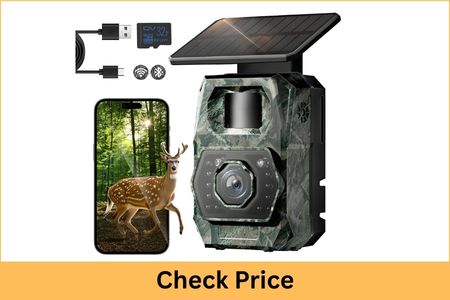
I received the camera on schedule in a package. Inside were the camera, solar panels, mounting accessories, Type-C cable, and 32GB SD card. The unit looked sturdy and ready.
Camera & Image Quality: I found the 4K video and 64MP photos sharp enough for identifying wildlife, with clear daytime detail and natural color. Moving animals stayed recognizable in recorded footage. Video includes sound with noise reduction, while customizable timestamps add context to saved images and videos. I could review details on stationary subjects.
Night Vision & Motion Detection: The infrared system records nighttime activity clearly up to 65 feet without visibly disturbing animals. Its 0.1-second trigger speed catches fast movement quickly, helping capture active wildlife as it passes. I could customize detection zones to limit false triggers from branches or other movement near the camera. Night footage retained useful animal detail for trail monitoring and property observation overnight.
Connectivity, App & Remote Monitoring: The camera uses Wi-Fi and Bluetooth through its TrailCamGO app, but it does not connect to home Wi-Fi or provide remote viewing. It creates a short-range hotspot for setup and file transfers, reaching about 55 feet, with 10 feet recommended.
Battery, Solar Power & Storage: The 6000mAh rechargeable battery supports solar, Type-C, and rechargeable charging. Adjustable split solar panels help keep this wildlife camera with motion detection powered outdoors. A pre-installed 32GB SD card stores recordings without subscription or monthly storage fees.
Build Quality & Outdoor Performance: The housing carries an IP66 rating for rainy and humid outdoor conditions. I found the physical construction suitable for outdoor placement, while the adjustable solar panels make positioning easier. The design suits backyard, farm, and forest monitoring. The concealed infrared system also helps keep nighttime operation discreet outdoors reliably year-round.
Features, Ease of Use & Overall Value: Setup with TrailCamGO is straightforward through the camera’s Wi-Fi and Bluetooth connection. I can use motion detection, scheduled shooting, time-lapse, and five-shot burst modes, then transfer files without removing the card. There are no subscription fees. For the price, the solar charging, 6000mAh battery, included storage, and imaging make it a practical option for hunters, wildlife watchers, and property owners.
Best For: I would choose it for hunters, wildlife watchers, farmers, and property owners who need outdoor recording without monthly fees or true remote monitoring. It fits locations where regular SD-card access is practical.
Pros
- Sharp 4K video quality
- High-resolution 64MP photos
- Fast 0.1-second trigger
- Adjustable solar charging panels
- Large 6000mAh rechargeable battery
- Includes 32GB SD card
- No monthly subscription fees
- IP66 outdoor weather protection
Cons
- No home Wi-Fi connection
- No true remote viewing
- Short-range wireless connection
2. TACTACAM Reveal X 3.0 4K Cellular LTE wildlife camera with motion detection

I received the camera on schedule in a compact package. Inside were the camera, 12 AA batteries, mounting strap, and pre-installed SIM and antenna. The tan housing looked rugged and ready.
Camera & Image Quality: I found the 4K photos clear in daylight, with useful detail for identifying deer and other wildlife. The camera also records 1080p video with audio, and I could select 10, 15, or 30-second clips on demand. The three-shot burst mode helped keep fast-moving animals in frame.
Night Vision & Motion Detection: The low-glow infrared system provides nighttime coverage beyond 96 feet while remaining virtually undetectable. I found the dual PIR sensors responsive to movement across the 60-degree viewing angle. Its sub-half-second trigger speed helps capture animals before they leave the frame, while improved low-light imaging preserves useful detail after dark.
Connectivity, App & Remote Monitoring: The camera uses cellular LTE instead of Wi-Fi and automatically connects to AT&T or Verizon based on signal strength. The REVEAL app provides motion alerts, GPS tracking, remote settings, weather data, and photo access. Cellular service requires a paid plan starting at $5 monthly.
Battery, Solar Power & Storage: Twelve AA batteries provide up to six months of claimed use, though frequent captures can reduce runtime. Optional solar panels, lithium cartridges, or battery belts extend operation. Built-in 32GB storage eliminates the need for an SD card, while cloud access comes through the app.
Build Quality & Outdoor Performance: The IP66 housing is designed for year-round outdoor use and has a recessed lens, weatherproof side-port flap, and locking battery door. I liked the tan camouflage and included tree strap for discreet placement. The external articulating antenna also supports cellular performance in demanding outdoor locations.
Features, Ease of Use & Overall Value: Setup is quick because the SIM and antenna arrive pre-installed. The app handles camera management, alerts, GPS, remote settings, and on-demand media. Three-shot burst adds useful coverage for moving game. Cellular plans create an ongoing cost, but the remote access, multi-carrier connection, long battery life, and built-in storage make it valuable for serious hunters and remote property monitoring.
Best For: I would choose it for hunters, landowners, farmers, and wildlife watchers who need a wildlife camera with motion detection and true cellular access for monitoring remote properties from home.
Pros
- Clear 4K photo quality
- Fast sub-half-second trigger
- Three-shot burst captures movement
- Auto-connects across two carriers
- Built-in GPS tracking
- Six-month battery life
- No SD card required
- IP66 outdoor protection
Cons
- Requires monthly cellular plan
- Video limited to 1080p
- Needs cellular coverage
3. MEIDASE P70 64MP 1296p No-Glow IR wildlife camera with motion detection

I got the camera on schedule in a compact package. Inside were the camera, mounting strap, USB cable, and instruction manual. Batteries and an SD card are not included, so I would need to purchase those separately. The unit felt compact, lightweight, and ready for straightforward outdoor wildlife monitoring.
Camera & Image Quality: I found the 64MP photos detailed enough for identifying deer and other wildlife, with selectable resolutions for different storage needs. The 1296p video records at up to 30 FPS, while H.264 compression keeps file sizes more manageable. The f/1.6 lens helps collect light in lower-light conditions, and the built-in microphone records sound with video. I could review captured photos and videos directly on the 2.4-inch color display without needing another device.
Night Vision & Motion Detection: The no-glow 940nm infrared system provides nighttime coverage up to 100 feet without producing a visible red glow that could easily attract wildlife. Its 0.1-second trigger speed responds quickly to moving animals, while the triple-PIR sensor array provides up to 120 degrees of detection coverage. I could adjust sensitivity between high, medium, and low settings and set the detection delay from zero to 60 minutes. This combination is useful for monitoring active deer trails and other wildlife after dark.
Connectivity, App & Remote Monitoring: The P70 does not use cellular, Wi-Fi, Bluetooth, or a companion app. It is a completely offline trail camera, so there are no remote viewing features, push notifications, or cloud storage. I have to physically retrieve the SD card to review recordings, or connect the camera to a computer using the included USB cable. I like the absence of network setup and subscription fees, although remote access is not possible.
Battery, Solar Power & Storage: The camera uses eight AA alkaline or lithium batteries, which are sold separately. Battery life can reach around one year with lighter photo use, while heavier video recording can reduce runtime considerably. I could also program operating times to limit unnecessary recording and conserve power. The P70 supports the Meidase SP350 solar panel, sold separately, and accepts an SD card up to 512GB. There are no cloud storage or monthly subscription fees.
Build Quality & Outdoor Performance: The housing has an IP66 rating for protection against dust and outdoor water exposure. I found the camouflage design suitable for blending into wooded areas, farms, and property boundaries. The included six-foot mounting strap works well on average-sized trees, although larger trunks may require an additional strap. Some owners report good outdoor durability, while others have experienced moisture around the battery compartment or early failures, so I would make sure the housing is securely closed before outdoor use.
Features, Ease of Use & Overall Value: Setup is straightforward because everything is controlled directly from the camera. The 2.4-inch color display and physical buttons make it easy to configure settings, review footage, adjust motion sensitivity, and schedule operating periods. I can select different photo resolutions, set detection delays, and record 1296p video without dealing with an app. For the price, the fast trigger, high-resolution photos, no-glow night vision, and subscription-free offline operation make it a practical option for hunters, wildlife watchers, farmers, and property owners.
Best For: I would choose it as a wildlife camera with motion detection for hunters, wildlife watchers, farmers, and property owners who want a simple trail camera without cellular service, Wi-Fi, apps, or monthly fees. It fits locations where physically retrieving the SD card is practical and reliable network coverage is not available.
Pros
- Detailed 64MP photos
- 1296p video at 30 FPS
- Fast 0.1-second trigger
- Triple-PIR motion detection
- 120-degree detection coverage
- 100-foot claimed night vision
- No-glow 940nm IR LEDs
- Supports solar power
- Up to 512GB SD card support
- No subscription fees
Cons
- No cellular connectivity
- No Wi-Fi or Bluetooth
- No remote viewing
4. MOULTRIE Edge 3 40MP Cellular GPS Twin-Pack wildlife camera with motion detection
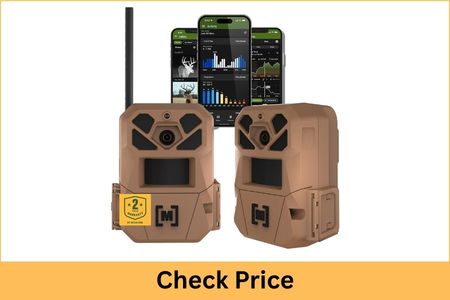
I got the two cameras in a compact package, with the units protected for shipment and ready for outdoor setup. Each camera has a camouflaged housing, mounting points, and the controls needed for field installation. The 2-pack gives me two monitoring locations from one purchase, which is useful when I want to cover separate trails or properties.
Camera & Image Quality: I found the 40MP photos detailed enough for identifying deer and other wildlife, while 1080p HD video provides useful movement and behavior footage. The camera can send HD images to the mobile app for quick viewing, while full-resolution photos are available on demand. Video also includes audio, and the low-glow infrared system helps maintain useful detail after dark. The image quality works well for scouting because I can check activity from my phone without physically visiting each camera.
Night Vision & Motion Detection: I found this wildlife camera with motion detection useful for monitoring moving deer because the dual PIR sensor system covers a 50-degree viewing angle and detects activity from up to 100 feet. Its 0.5-second trigger speed responds quickly enough to capture animals moving through trails, while the low-glow infrared flash helps keep nighttime operation less noticeable. Moultrie AI can identify bucks and send alerts when qualifying activity is detected, which can reduce unnecessary notifications from vegetation or other movement. The combination is particularly useful when I want to monitor deer activity overnight without disturbing the area.
Connectivity, App & Remote Monitoring: The EDGE 3 uses cellular connectivity rather than requiring home Wi-Fi. It automatically connects to the strongest available network among four major U.S. carriers, so I do not need to swap SIM cards manually. Through the Moultrie Mobile app, I can receive photos, request images or videos, check camera information, and use Live Aim to help position the camera correctly. GPS mapping also helps me keep track of where each unit is installed. A subscription is required for the cellular photo and video service, with plans starting at $9.99 per month according to the provided product information.
Battery, Solar Power & Storage: The camera works with Moultrie rechargeable lithium battery packs and can also use compatible Moultrie solar panels for extended outdoor operation. Battery performance depends on recording frequency, signal strength, temperature, and the selected power setup. I like having solar compatibility because it can reduce the need for frequent battery changes when the camera is positioned in a suitable location. Photos and videos can be delivered through the cellular service and stored through the app according to the selected subscription plan. Without an active subscription, the remote delivery features are limited, so I would factor the recurring service cost into the overall ownership price.
Build Quality & Outdoor Performance: The EDGE 3 has a camouflaged plastic housing designed for hunting and wildlife environments. Its integrated mounting slots make tree installation straightforward, while the weather-protected bottom panel helps protect the connection area. I also like the built-in GPS because it makes it easier to keep track of multiple cameras across a property. The camera includes temperature monitoring and can work with compatible Moultrie feeders, allowing certain feeder functions to be controlled through the app. The overall design is suited to wooded areas, hunting properties, farms, and remote wildlife-monitoring locations.
Features, Ease of Use & Overall Value: Setup is convenient because the camera does not require a home Wi-Fi network and can automatically select among supported cellular carriers. Live Aim helps me check the camera’s view before leaving the property, while AI buck detection can make alerts more relevant for deer scouting. I can monitor activity from the Moultrie app, request additional photos or videos, and keep track of camera locations through GPS. The 2-pack is particularly useful when I want to monitor two separate locations. However, the required subscription and dependence on cellular coverage add ongoing costs that I would consider before buying.
Best For: I would choose it for deer hunters, landowners, and wildlife watchers who want cellular monitoring, app-based alerts, GPS mapping, and remote access from multiple locations. It fits properties with dependable cellular coverage where visiting each camera regularly would be inconvenient.
Pros
- Detailed 40MP photos
- 1080p HD video
- Fast 0.5-second trigger
- 100-foot detection range
- Low-glow infrared night vision
- AI buck detection
- Four-carrier auto-connect
- Live Aim and GPS
- Real-time mobile alerts
- Two-camera package
Cons
- Subscription required
- Cellular signal is necessary
- Connectivity can vary by location
5. SPYPOINT Flex-M 28MP Dual-SIM LTE GPS Twin-Pack wildlife camera with motion detection

I got the cameras on schedule in a compact package. Inside were the two FLEX-M cameras, mounting straps, and the accessories needed for setup. The cameras felt lightweight and practical for placing in different areas, while the dual-camera pack makes it easier to monitor separate trails or property locations.
Camera & Image Quality: I found the 28MP photos useful for identifying wildlife, especially at closer and medium distances. The cameras also record 720p HD video with sound, along with Photo, Video, Time-Lapse, and Time-Lapse+ modes. Constant Capture technology allows the camera to capture and transmit images while continuing to record activity. Daytime images generally provide better detail, although some users report blurry or fuzzy results when subjects are near the maximum detection range.
Night Camera & Image Quality: The FLEX-M uses low-glow infrared night vision with a claimed range of up to 90 feet, making it a wildlife camera with motion detection for monitoring deer and other animals after dark. Its PIR sensor detects movement from up to 90 feet, while the adjustable sensitivity levels help control how readily the camera responds. The roughly 0.4 to 0.5-second trigger speed is quick enough to capture moving wildlife as it crosses the detection area. I found nighttime images suitable for general trail monitoring, although they do not offer the same level of detail as more advanced cameras. A faint red glow may also be visible from certain angles.
Connectivity, App & Remote Monitoring: The FLEX-M uses dual-SIM LTE cellular connectivity, so I do not need Wi-Fi at the camera location. It automatically selects available carrier coverage instead of requiring manual network selection. Through the SPYPOINT app, I can receive photos, view and download footage, check weather information, manage camera settings, perform firmware updates, and use GPS location features. Remote monitoring depends on cellular signal, so transmission can be close to real time in strong coverage areas but significantly slower where reception is weak. The free plan allows up to 100 transmitted photos per month, while higher usage requires a paid plan.
Battery, Solar Power & Storage: Each camera uses eight AA batteries or the optional LIT-22 rechargeable lithium battery pack. I would prefer the rechargeable lithium option for regular field use, although it is sold separately. Battery life varies considerably with activity and transmission frequency, with reports ranging from several weeks to multiple months. Compatible SPYPOINT solar panels can extend operating time outdoors. A microSD card is required for local recording and is not included, with support for capacities up to 512GB. Cellular photo transmission also depends on the selected SPYPOINT plan.
Build Quality & Outdoor Performance: The cameras have an IP65-rated housing designed to handle dust and outdoor water exposure. Their compact olive-green camouflage finish helps them blend into wooded surroundings, while the included adjustable straps make tree mounting straightforward. I found the overall construction practical for hunting areas, farms, and remote property monitoring. The dual external antennas are designed to help with cellular reception, although some users have raised concerns about certain mounting components and the quality of the latch.
Features, Ease of Use & Overall Value: I found the FLEX-M convenient for hunters who want cellular monitoring without installing Wi-Fi in the field. Setup can be completed through the SPYPOINT app, while on-camera controls help with basic configuration and microSD formatting. I can choose photo, video, Time-Lapse, or Time-Lapse+ capture modes and remotely manage settings when the camera has cellular coverage. GPS tracking, weather information, notifications, and BUCK TRACKER AI add useful tools for hunting and wildlife observation. The free photo plan is helpful, but frequent photo or video transmission can require additional paid service.
Best For: I would choose this twin pack for hunters, wildlife watchers, farmers, and property owners who need cellular trail cameras at multiple locations without relying on Wi-Fi. It works particularly well for remote monitoring where cellular coverage is available, but I would avoid depending on it in areas with consistently weak signal.
Pros
- 28MP photo resolution
- 720p video with sound
- Fast 0.4 to 0.5-second trigger
- Up to 90-foot night vision
- Dual-SIM LTE connectivity
- No Wi-Fi required
- GPS location tracking
- Remote app management
- Free 100-photo monthly plan
- Twin-camera value
Cons
- Paid plans needed for higher usage
- Video uses more plan allowance
- MicroSD card not included
6. CEYOMUR 36MP HD 850nm IR Color-Screen wildlife camera with motion detection

I received the camera on schedule in a compact package. Inside were the camera, mounting strap, USB cable, and instruction materials. Batteries and an SD card are not included, so I would need to purchase those separately. The solid brown housing felt lightweight and simple, making it suitable for straightforward wildlife monitoring.
Camera & Image Quality: I found the 36MP photos detailed enough for identifying deer and other wildlife, while the upgraded 2K video provides more detail than the older 1080p version. The camera records video at up to 30 FPS and includes audio recording, so I could capture both movement and sound. The 2-inch color screen also lets me preview photos and play back videos directly in the field. Some daytime images can look slightly washed out in bright conditions, but overall image quality is good for this price range.
Night Vision & Motion Detection: This wildlife camera with motion detection uses 24 built-in 850nm infrared LEDs and an automatic IR filter to capture black-and-white footage after dark. The 850nm system produces brighter nighttime images than many 940nm setups, helping me see animal details in complete darkness. Its PIR sensor detects movement across roughly 60 to 65 feet, while the fast 0.2-second trigger helps capture animals moving through the detection area. I could adjust motion sensitivity to help reduce unnecessary triggers. Night footage is generally clear, although coverage is more limited than some larger trail cameras.
Connectivity, App & Remote Monitoring: The CEYOMUR CY40 does not use cellular, Wi-Fi, Bluetooth, or a companion app. It operates completely offline, so there are no remote viewing features, push notifications, or cloud storage. I have to physically remove the SD card to review footage on a computer, or connect the camera through USB. I like that there are no connectivity requirements or monthly subscription fees, although checking recordings from a distant location requires more effort.
Battery, Solar Power & Storage: The camera uses eight AA batteries, including alkaline or rechargeable lithium options, which are sold separately. Battery performance can vary considerably depending on recording frequency and settings. I could use programmable operating times, such as nighttime-only recording, to reduce unnecessary activity and help conserve power. The camera supports up to 32GB SD cards, which are also not included. It can use an external 12V power source, and compatible solar panels are available separately.
Build Quality & Outdoor Performance: The IP66-rated housing is designed to protect against dust and outdoor water exposure, while the solid brown or camouflage-style finish helps the camera blend into natural surroundings. I liked the integrated design because the lens, screen, and controls are positioned on the same side, making it easier to adjust the viewing angle during installation. However, customer feedback raises concerns about moisture entering the housing and battery compartment, as well as some early failures. I would use extra care when sealing the camera before leaving it outdoors for extended periods.
Features, Ease of Use & Overall Value: Setup is simple because the camera uses physical controls rather than an app. The 2-inch LCD screen makes it easy to adjust settings and review recordings in the field. I can use motion detection, time-lapse, audio recording, timestamps with date and temperature, and password protection. For the low price, the 36MP photos, upgraded 2K video, 850nm infrared system, and fast trigger speed make it an appealing starter camera. However, the inconsistent battery life and mixed durability reports are worth considering before using it for long-term deployment.
Best For: I would choose it for budget-conscious beginners, backyard wildlife watchers, hunters, farmers, and property owners who need basic outdoor recording without subscriptions or wireless connectivity. It works best for short-term or seasonal monitoring where manually retrieving the SD card is practical.
Pros
- Detailed 36MP photos
- Upgraded 2K video
- Fast 0.2-second trigger
- Bright 850nm night vision
- 2-inch color LCD screen
- Integrated front-facing design
- Motion detection and time-lapse
- No subscription fees
- IP66-rated housing
Cons
- No cellular connectivity
- No Wi-Fi or Bluetooth
- No remote viewing
7. KJK 36MP 2.7K 130° Wide-Angle 0.1s wildlife camera with motion detection
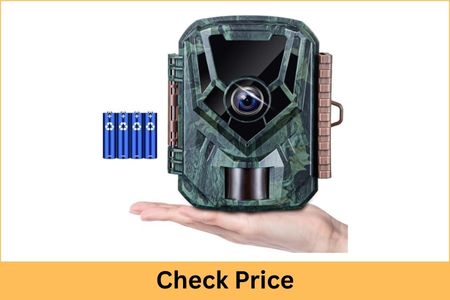
I got the camera on schedule in a compact package. Inside were the camera, mounting strap, stand, USB cable, and user guide. The camera itself felt small, lightweight, and easy to carry into the field. Four AA batteries are included, but an SD card is not, so I would need to purchase one separately before recording.
Camera & Image Quality: I found the 36MP photos clear enough for identifying deer and other wildlife, especially in daylight. The camera records 2.7K video at up to 30 FPS with sound, while the 2.0-inch HD TFT color screen lets me review footage directly on the camera. The 130-degree detection view gives me a broad scene, and timestamp information can add useful context to captured photos and videos. Daytime image quality is one of its stronger points for the price, although nighttime footage can become grainier at longer distances.
Night Vision & Motion Detection: The 850nm low-glow infrared system provides nighttime visibility up to about 75 feet, with adaptive illumination designed to prevent overly bright or dark footage. Its trigger speed is less than 0.1 seconds, so I found it responsive when animals moved through the detection area. I could select one, two, or three-shot capture modes and adjust motion sensitivity between high, medium, and low. The PIR system helps reduce unnecessary triggers, although some users report missed detections, particularly in warmer conditions.
Connectivity, App & Remote Monitoring: The KJK camera does not use cellular service, Wi-Fi, Bluetooth, or a companion app. It works as a standalone offline camera, so there are no remote viewing features, smartphone alerts, or cloud storage. I can review recordings on the built-in 2.0-inch display or remove the SD card and transfer files to another device. I like the simple setup, especially when I do not want to deal with wireless connections or monthly fees.
Battery, Solar Power & Storage: The camera uses four AA batteries, which are included, and the manufacturer states that the setup can capture up to 17,000 images under suitable conditions. Actual battery life will depend heavily on how often the camera detects and records movement. I found the battery performance generally useful for a budget trail camera, although frequent recording can drain batteries much faster. There is no noted solar charging system, and an SD card up to 512GB is supported but must be purchased separately.
Build Quality & Outdoor Performance: The KJK201 is a wildlife camera with motion detection built for outdoor placement, with an IP66 rating and a stated operating range from -22°F to 158°F. I found the compact ABS housing easy to conceal and carry, while the camouflage pattern helps it blend into wooded surroundings. The recessed lens, rubber-sealed ports, included tree strap, and stand provide practical mounting options for different locations. The small size also makes it less noticeable when installed outdoors. Some users report reliable performance in rain and snow, although isolated moisture concerns mean I would still check the seals carefully before leaving it outside for extended periods.
Features, Ease of Use & Overall Value: Setup is simple because the camera uses physical controls rather than an app. The built-in color screen lets me configure settings and check recordings immediately after installation. I can choose different burst modes, adjust PIR sensitivity, add timestamps, and record photos or videos without paying for cloud storage. At its budget-friendly price, the fast trigger, 36MP photos, compact design, included batteries, and wide detection area make it a practical choice for casual wildlife monitoring, hunting scouting, farms, and backyard observation.
Best For: I would choose it for budget-conscious hunters, wildlife watchers, farmers, and property owners who want a simple offline trail camera for daytime-focused monitoring. It works best where I can physically retrieve the SD card and do not need remote alerts or cellular access.
Pros
- Clear 36MP daytime photos
- 2.7K video at 30 FPS
- Less than 0.1-second trigger
- 130-degree detection area
- 75-foot claimed night vision
- Compact and easy to conceal
- Four AA batteries included
- IP66 weather protection
- Built-in 2.0-inch color screen
- No subscription fees
Cons
- No cellular connectivity
- No Wi-Fi or app
- No remote viewing
8. WOSPORTS Mini 30MP 1080P HD Fast-Trigger wildlife camera with motion detection
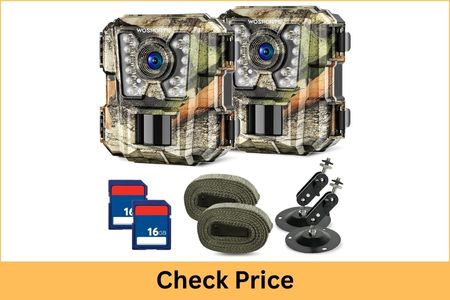
I received the camera on schedule in a small, lightweight package. Inside were the camera, mounting strap, wall-mount accessories, screws, and instruction manual. The 4 AA batteries and SD card are not included, so I would need to purchase those separately. The compact camouflage body felt easy to carry and simple to place outdoors.
Camera & Image Quality: I found the 30MP photos suitable for basic daytime wildlife observation, especially for spotting deer and other animals around a backyard, garden, or farm. The camera records Full HD 1080P video according to the product listing, although some user reports indicate inconsistent video performance and lower recorded resolution. Daytime photos generally offer reasonable detail for the low price, while nighttime images can look grainier. I would consider it more suitable for basic photo monitoring than demanding video documentation.
Night Vision & Motion Detection: The 850nm infrared system captures black-and-white images in low light, while the PIR sensor detects movement and triggers the camera quickly. I could adjust motion sensitivity between high, medium, and low settings to suit different locations. The detection range appears more limited than premium trail cameras, with some users reporting around 25 feet in practical use. Nighttime performance is mixed, so I would position the camera fairly close to the area I want to monitor.
Connectivity, App & Remote Monitoring: The camera does not provide cellular, Wi-Fi, Bluetooth, or companion-app connectivity. There is no remote viewing, cloud storage, or push notification system. I need to remove the SD card and use a compatible reader or connect the camera to a computer to review saved files. This keeps the setup simple and avoids subscription fees, but it also means I cannot check the camera remotely.
Battery, Solar Power & Storage: The camera uses 4 AA batteries, which are not included. Its low-power design can provide useful standby time, although battery performance varies considerably depending on recording frequency and individual units. I would use quality lithium batteries when leaving it outdoors for longer periods. The camera supports a microSD card up to 32GB, also sold separately. There is no solar charging or cloud storage, so both power and footage are handled locally.
Build Quality & Outdoor Performance: The WOSPORTS Mini Trail Camera is a wildlife camera with motion detection built with a compact camouflage housing that is easy to conceal around trees, posts, fences, gardens, and other outdoor areas. Its IP56 rating provides protection against dust and low-pressure water exposure, making it suitable for typical outdoor monitoring. I found the lightweight 0.73-pound body convenient to install, and the included nylon strap makes tree mounting straightforward. However, durability feedback is mixed, with some users reporting issues involving the latch or power switch after extended use.
Features, Ease of Use & Overall Value: Setup is simple because there is no app or wireless pairing to configure. I can mount the camera, insert compatible batteries and an SD card, adjust the settings, and begin monitoring. The 2.4-inch LCD helps with basic setup and menu navigation, while adjustable sensitivity and burst photography provide some flexibility. At its low price, I think it offers reasonable value for daytime wildlife photos, backyard observation, garden monitoring, and basic farm use. However, I would not rely on it for important video recording because user feedback indicates inconsistent video performance.
Best For: I would choose it for budget-conscious buyers who mainly want basic daytime wildlife photos around a backyard, garden, farm, or short-term observation area. It is better suited to casual monitoring than professional wildlife research, security-critical applications, or situations requiring dependable nighttime video.
Pros
- Affordable entry-level price
- Compact camouflage design
- 30MP photo capability
- 1080P HD video claim
- Fast motion-trigger response
- Adjustable PIR sensitivity
- Easy tree installation
- No subscription fees
- Lightweight outdoor housing
Cons
- 4 AA batteries not included
- SD card not included
- No cellular or Wi-Fi
9. WOSPORTS Mini 24MP 1080P HD IR Twin-Pack wildlife camera with motion detection
I got the two cameras in a compact package with mounting straps, wall mounts, screws, instruction materials, and a 16GB SD card for each camera. The mini camouflage housings felt lightweight and easy to handle, making the two-pack convenient when I wanted to monitor two locations at once.
Camera & Image Quality: I found the 24MP photos clear enough for identifying deer and other wildlife, with 1080p Full HD video providing useful daytime detail. The 120-degree field of view covers a broad area, while the CMOS sensor captures color images during the day and black-and-white footage at night. Video also records audio, and the date, time, and customizable ID overlay help me organize saved footage. Daytime image quality is generally strong, although nighttime results can vary.
Night Vision & Motion Detection: The 850nm infrared system provides nighttime coverage up to 50 feet, with 24 IR LEDs producing black-and-white images after dark. Its 0.3-second trigger speed responds quickly when animals pass through the detection area. I could adjust motion sensitivity between high, medium, and low levels and choose photo, video, or photo-plus-video capture. The dual-PIR setup helps detect movement across the camera’s wide viewing area, making it useful for deer trails, backyard observation, and property monitoring.
Connectivity, App & Remote Monitoring: The cameras have no cellular, Wi-Fi, Bluetooth, or companion app connectivity. They operate completely offline, so I cannot receive alerts or view recordings remotely. I have to remove the SD card and use a compatible card reader or adapter to transfer files to a computer or smartphone. I see this as a benefit for buyers who want a simple subscription-free setup, but it is less convenient when the cameras are installed far from home.
Battery, Solar Power & Storage: Each camera uses four AA alkaline or lithium batteries, which are not included. The low-power design helps extend standby time, and customer feedback on battery performance is generally positive, with several months of typical motion-activated use reported. There is no solar charging or external power support, so battery replacement is the only power option. Each camera includes a 16GB SD card, giving me two cards with the two-pack. The cameras support local storage without cloud fees or monthly subscriptions. This makes it a wildlife camera with motion detection that can run for extended periods without frequent battery changes, although actual runtime depends on activity levels and battery type.
Build Quality & Outdoor Performance: The mini camouflage housing is easy to conceal among trees, gardens, farms, and other outdoor areas. I found the compact size convenient for discreet placement, and the included straps and wall mounts give me multiple installation options. However, the IP54 rating only provides limited protection against water exposure, and customer feedback raises concerns about moisture entering the housing. Some users have reported waterlogging, rust, and cameras failing after several months. I would therefore use these in relatively dry conditions or provide additional protection when possible.
Features, Ease of Use & Overall Value: Setup is simple because I only need to install four AA batteries, insert the included SD card, choose my recording settings, and mount the camera. The two-camera package is useful when I want coverage in separate areas without buying two individual kits. The 24MP photos, 1080p video, adjustable motion sensitivity, 0.3-second trigger, and included storage offer good features for the price. However, I would consider the reported moisture and durability problems before relying on these cameras for long-term outdoor deployment.
Best For: I would choose this two-pack for budget-conscious hunters, wildlife watchers, farmers, and property owners who need affordable coverage across multiple locations. It is better suited to short-term monitoring, dry climates, covered outdoor areas, and situations where replacing a camera would not be difficult.
Pros
- 24MP photo resolution
- 1080p Full HD video
- Fast 0.3-second trigger
- 120-degree field of view
- Adjustable motion sensitivity
- Two cameras in one kit
- Includes two 16GB SD cards
- Low-power battery design
- Compact camouflage housing
- No monthly subscription
Cons
- No cellular connectivity
- No Wi-Fi or app
- No remote viewing
10. LOATOS 2K 4G LTE AI Solar Live-View wildlife camera with motion detection

I got the camera on schedule in a compact package. Inside were the cellular trail camera, solar panel, and mounting accessories. The unit felt sturdy and ready for remote wildlife monitoring, with a built-in SIM designed for 4G LTE operation across supported U.S. networks.
Camera & Image Quality: I found the 2K video detailed enough for identifying deer and other wildlife, with clear footage during both daytime and nighttime use. The live-view function lets me check the camera remotely, while recorded photos and videos can be saved locally or through cloud storage. Up to four users can view the live feed simultaneously, which is useful when sharing wildlife activity with family or hunting partners.
Night Vision & Motion Detection: The camera uses 940nm low-light infrared technology to record nighttime activity without producing a visible glow that could easily disturb wildlife. Its 0.2-second trigger speed responds quickly when animals enter the detection area, helping capture moving subjects as they pass. The infrared system is designed for discreet nighttime monitoring, making it suitable for deer trails, hunting areas, farms, and remote property observation.
Connectivity, App & Remote Monitoring: The built-in 4G LTE connection works on supported Verizon, T-Mobile, and AT&T networks in the United States, so I do not need home Wi-Fi for remote access. Through the Ucon App, I can manage the camera, view 2K live video, share footage, and monitor activity remotely. The app also provides AI animal identification, weather information, wind direction, air pressure, topographic mapping, and custom markers. AI species detection requires cloud storage.
Battery, Solar Power & Storage: The 4W solar panel helps maintain power outdoors, making the camera suitable for longer-term installations where frequent battery changes would be inconvenient. The camera is designed for continuous outdoor operation, while local recording can continue on the memory card even when cellular data expires. It supports memory cards up to 128GB, although the card is not included. Cloud storage is also available with a 30-day trial for new users. After the initial seven-day unlimited data trial, a paid data plan is required for continued cellular service.
Build Quality & Outdoor Performance: I found the camouflage housing suitable for blending into wooded areas, hunting locations, farms, and remote properties. The solar-powered design makes placement more flexible because I can install the camera where access is less convenient. Its 4G connectivity also means I can monitor activity without relying on a nearby Wi-Fi router. For outdoor use, I would still position the camera carefully so the solar panel receives sufficient sunlight and the lens has a clear view of the monitoring area.
Features, Ease of Use & Overall Value: The Loatos RBX-H10 is a wildlife camera with motion detection that combines 2K live viewing, AI detection, cellular connectivity, solar charging, and remote management in one setup. I can use the Ucon App to check live footage, receive wildlife information, analyze activity, and manage camera settings remotely. The 0.2-second trigger helps capture moving animals, while local and cloud storage give me two ways to access recordings. The built-in SIM includes a seven-day unlimited data trial, followed by paid service for continued cellular operation. For hunters, wildlife watchers, and property owners who need remote access in areas without Wi-Fi, the combination of solar power, 4G connectivity, AI tools, and live view gives it strong practical value.
Best For: I would choose it for hunters, wildlife researchers, farmers, landowners, and outdoor users who need remote monitoring without relying on home Wi-Fi. It is particularly useful for remote locations where solar power and 4G connectivity can reduce the need for frequent physical visits.
Pros
- 2K live video
- Built-in 4G LTE connectivity
- 0.2-second trigger speed
- 4W solar panel
- AI animal detection
- Remote app management
- Supports four live viewers
- Local and cloud storage
- No home Wi-Fi required
Cons
- Cellular service requires a paid plan
- Service currently limited to the U.S.
- SD card not included
FAQs About the Best Wildlife Camera with Motion Detection
Question: What is a wildlife camera with motion detection?
Answer: A wildlife camera with motion detection automatically captures photos or videos when movement occurs, helping monitor animals without continuously recording and conserving storage space and battery power.
Question: How does motion detection work on wildlife cameras?
Answer: Motion sensors detect changes in movement or heat within their coverage area, triggering the camera to capture photos or videos whenever an animal enters the detection zone.
Question: What is a good trigger speed for wildlife monitoring?
Answer: A trigger speed between 0.1 and 0.3 seconds is generally effective because it quickly captures moving animals before they leave the camera’s viewing area during activity.
Question: Can motion detection reduce false triggers?
Answer: Yes, adjustable sensitivity settings and detection zones can reduce false triggers caused by branches, grass, changing temperatures, or other unnecessary movement around the camera.
Question: Does motion detection work at night?
Answer: Yes, many trail cameras combine motion sensors with infrared night vision, allowing them to detect and record wildlife after dark without requiring visible lighting for operation.
Question: How far can motion detection reach?
Answer: Detection range varies by model, but many outdoor cameras can detect movement from approximately 60 to 100 feet, depending on sensor sensitivity, terrain, weather, and placement.
Question: Can motion detection record both photos and videos?
Answer: Most trail cameras allow users to select photo, video, or combined capture modes, giving flexibility for documenting animal movement, behavior, and activity around monitored areas outdoors.
Question: Does motion detection drain the camera battery quickly?
Answer: Frequent animal activity can increase battery consumption because every detection triggers recording. Lower sensitivity, scheduled operation, and solar charging can help extend operating time outdoors significantly.
Question: Where should I place a motion detection trail camera?
Answer: Position the camera near trails, feeding areas, watering locations, or property entrances, keeping the lens clear and angled slightly downward for better animal detection and framing.
Question: Is motion detection useful for monitoring deer?
Answer: Motion detection is particularly useful for deer monitoring because it automatically captures passing animals, helping hunters, landowners, and wildlife observers document movement without constant supervision or monitoring.