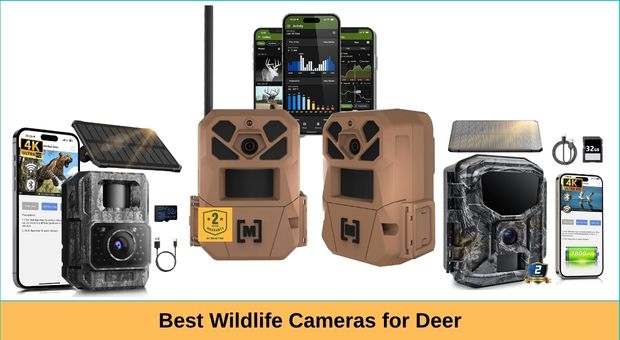
Choosing the best wildlife camera for deer depends on image quality, trigger speed, night vision, connectivity, battery life, and outdoor durability. In this comparison, I reviewed standalone and cellular models with different strengths. Some offer high-resolution photos, solar charging, and no monthly fees, while others provide remote alerts, GPS tracking, and app controls. No-glow infrared helps capture nighttime activity discreetly, while fast triggers improve moving-animal captures. Consider your monitoring location, cellular coverage, storage needs, and long-term operating costs before choosing.
Here is a Comparison Table of the Best Wildlife Camera for Deer: Our Top 3 Picks
| Feature | MAXDONE Solar | TACTACAM Reveal X 3.0 | MEIDASE P70 |
| Resolution | 4K / 64MP | 4K photos / 1080p video | 64MP / 1296p |
| Connectivity | WiFi + Bluetooth | Cellular LTE | No WiFi / Cellular |
| Night Vision | IR night vision | Night vision | No-glow IR |
| Trigger Speed | Motion activated | Motion activated | Motion activated |
| Power | 6000mAh + solar | 6+ month battery | Battery powered |
| Weatherproofing | IP66 | IP66 | Waterproof |
| Best For | Remote local monitoring | Cellular remote scouting | Affordable offline use |
Best Wildlife Camera for Deer – Full List
- MAXDONE Solar 4K 64MP WiFi Bluetooth Wildlife Camera for Deer – Best-Value
- TACTACAM Reveal X 3.0 4K Cellular LTE Wildlife Camera for Deer – Top-Rated
- MEIDASE P70 64MP No-Glow IR Waterproof Wildlife Camera for Deer – Best-Budget
- MOULTRIE Edge 3 40MP Cellular GPS 2-Pack Wildlife Camera for Deer – Best-Selling
- SPYPOINT Flex-M Twin Pack 28MP GPS LTE Wildlife Camera for Deer – All-Purpose
- TACTACAM Reveal Pro 3.0 4K GPS Cellular Wildlife Camera for Deer – Pro-Quality
- SPYPOINT Flex-M 28MP Cellular 3-Pack Wildlife Camera for Deer – Most-Affordable
- GARDEPRO E5S 64MP No-Glow 2-Pack Wildlife Camera for Deer – High-Quality
- FARGARLOO 4K 60MP Solar WiFi Waterproof Wildlife Camera for Deer – Budget-Friendly
- SPYPOINT Flex-S-Dark 40MP Solar Cellular Wildlife Camera for Deer – Ultra-Premium
Best Wildlife Camera for Deer
1. MAXDONE 4K 64MP WiFi Bluetooth Night Vision Wildlife Camera for Deer
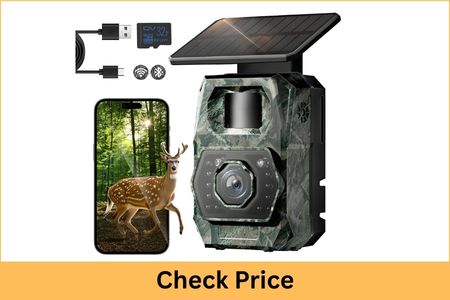
I received the camera on schedule in a package. Inside were the camera, solar panel, mounting accessories, Type-C cable, and 32GB SD card. The unit looked sturdy and ready.
Camera & Image Quality: I found the 4K video and 64MP photos sharp enough for identifying wildlife, with clear daytime detail and natural color. Moving animals stayed recognizable in recorded footage. Video includes sound with noise reduction, while customizable timestamps add context to saved images and videos. I could review details on stationary subjects.
Night Vision & Motion Detection: The infrared system records nighttime activity clearly up to 65 feet without visibly disturbing animals. Its 0.1-second trigger speed catches fast movement quickly, helping capture active wildlife as it passes. I could customize detection zones to limit false triggers from branches or other movement near the camera. Night footage retained useful animal detail for trail monitoring and property observation overnight.
Connectivity, App & Remote Monitoring: The camera uses Wi-Fi and Bluetooth through its TrailCamGO app, but it does not connect to home Wi-Fi or provide remote viewing. It creates a short-range hotspot for setup and file transfers, reaching about 55 feet, with 10 feet recommended.
Battery, Solar Power & Storage: The 6000mAh rechargeable battery supports solar and Type-C charging. Adjustable split solar panels help maintain power outdoors. A pre-installed 32GB SD card handles recordings, and there are no subscription or monthly storage fees.
Build Quality & Outdoor Performance: The housing carries an IP66 rating for rainy and humid outdoor conditions. I found the physical construction suitable for outdoor placement, while the adjustable solar panels make positioning easier. The design suits backyard, farm, and forest monitoring. The concealed infrared system also helps keep nighttime operation discreet outdoors year-round.
Features, Ease of Use & Overall Value: Setup with TrailCamGO is straightforward through the camera’s Wi-Fi and Bluetooth connection. I can use motion detection, scheduled shooting, time-lapse, and five-shot burst modes, then transfer files without removing the card. There are no subscription fees. For the price, the solar charging, 6000mAh battery, included storage, and imaging make it a practical option for hunters, wildlife watchers, and property owners.
Best For: I would choose it as a wildlife camera for deer for hunters, wildlife watchers, farmers, and property owners who need outdoor recording without monthly fees or true remote monitoring. It fits locations where regular SD-card access is practical.
Pros
- Sharp 4K video quality
- High-resolution 64MP photos
- Fast 0.1-second trigger
- Adjustable solar charging panels
- Large 6000mAh rechargeable battery
- Includes 32GB SD card
- No monthly subscription fees
- IP66 outdoor weather protection
Cons
- No home Wi-Fi connection
- No true remote viewing
- Short-range wireless connection
2. TACTACAM Reveal X 3.0 4K Cellular Night Vision Wildlife Camera for Deer
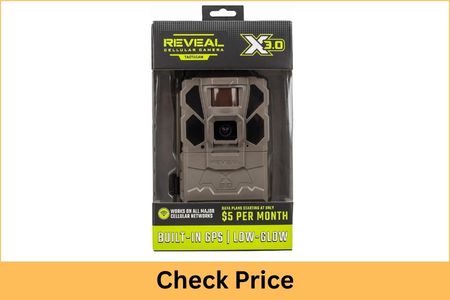
I received the camera on schedule in a compact package. Inside were the camera, pre-installed SIM and antenna, mounting strap, and setup materials. The unit arrived securely packed and looked rugged enough for outdoor placement. The setup felt straightforward from the first inspection.
Camera & Image Quality: I found the 4K photos detailed enough for identifying deer and other wildlife, while 1080p video provides clear motion footage with sound. Daytime images show good color and detail, and the improved dual-sensor system produces better pictures than the previous generation. The three-shot burst also helps capture fast-moving animals.
Night Vision & Motion Detection: The low-glow 850nm infrared system reaches up to 96 feet and captures bright, detailed nighttime images. Its sub-half-second trigger responds quickly to moving animals, while three-shot burst photography increases the chance of getting a centered frame. Adjustable sensitivity helps reduce triggers from vegetation. Detection performance depends on a stable cellular connection.
Connectivity, App & Remote Monitoring: The camera uses 4G LTE and automatically selects between AT&T and Verizon based on signal strength. The REVEAL app sends motion photos within seconds and provides GPS tracking, battery and signal monitoring, remote settings, and wildlife analytics. An active data plan is required, with plans starting around $5 monthly.
Battery, Solar Power & Storage: Twelve AA batteries provide up to six months with lighter use, but frequent transmissions can drain them much faster. A lithium cartridge or solar panel extends runtime. Built-in storage eliminates the need for an SD card, while optional microSD backup is supported.
Build Quality & Outdoor Performance: The IP66-rated housing feels rugged and well suited to rain, snow, mud, and humid conditions. The recessed lens, weatherproof flap, external antenna, and secure mounting design add practical outdoor protection. The tan housing blends into natural surroundings, while the locking features help keep the camera secure in the field.
Features, Ease of Use & Overall Value: Setup took only a few minutes using the pre-installed SIM, antenna, and REVEAL app. I can manage multiple cameras, receive alerts, check GPS location, monitor battery status, and adjust settings remotely. The camera requires a cellular plan, adding ongoing cost. At $84.99, it suits users who value true remote monitoring.
Best For: I would choose this as a wildlife camera for deer for hunters, landowners, farmers, and wildlife watchers who need cellular alerts, GPS tracking, remote settings, and automatic photo delivery from locations without household Wi-Fi.
Pros
- Sharp 4K photo quality
- Fast sub-half-second trigger
- 96-foot night vision range
- Automatic AT&T/Verizon carrier selection
- Built-in GPS tracking
- Remote app-based monitoring
- IP66 weather protection
- Pre-installed SIM and antenna
Cons
- Requires ongoing data subscription
- Heavy use drains batteries
- Some connectivity reliability complaints
3. MEIDASE P70 64MP 1296p No Glow IR Motion Activated Wildlife Camera for Deer

I got the camera on schedule in a compact package. Inside were the camera, six-foot mounting strap, and USB cable. The camouflage-finished unit looked sturdy and compact, with simple controls and a practical field-ready design.
Camera & Image Quality: I found the 64MP photos detailed enough for identifying wildlife, while 1296p video records at 30fps with sound. Daytime images showed strong detail and clear subjects, supported by the f/1.6 lens and low-light enhancement. The 70-degree view keeps distant subjects relatively focused, while photo, video, and photo-then-video modes add flexibility.
Night Vision & Motion Detection: The 940nm no-glow infrared system reaches up to 100 feet without visibly disturbing animals. Its 0.1-second trigger responds quickly, while three PIR sensors provide 120-degree detection coverage. I could choose among three sensitivity levels to reduce unnecessary triggers from vegetation. Night results were generally clear, although feedback indicates infrared performance can vary with distance.
Connectivity, App & Remote Monitoring: This is a completely standalone camera without cellular, Wi-Fi, Bluetooth, or a mobile app. I had to visit the camera to review recordings, using the SD card or included USB cable. There are no remote alerts, live viewing, or subscription costs.
Battery, Solar Power & Storage: The camera uses eight AA batteries, which are sold separately. Photo use can exceed one year under stated testing conditions, while video use lasts around eight months. It supports the optional SP350 solar panel. A full-size SD card up to 512GB is supported but must be purchased separately.
Build Quality & Outdoor Performance: The IP66-rated housing uses a camouflage finish and recessed lens for outdoor concealment. The included six-foot strap makes tree mounting simple, and a tripod socket provides another option. I found the construction suitable for field use, although customer reports include some water ingress and durability concerns.
Features, Ease of Use & Overall Value: The 2.4-inch color display and physical buttons make setup and playback simple without an app. I could schedule operation, adjust detection sensitivity, and select photo, video, or combined recording. At $41.98, the low purchase price and zero subscription fees make it attractive for basic local wildlife monitoring.
Best For: I would choose it as a wildlife camera for deer for budget-conscious hunters and first-time trail camera buyers who prioritize detailed local recordings, fast triggers, long photo-mode battery life, and zero recurring fees over remote monitoring.
Pros
- Detailed 64MP photos
- 1296p video with audio
- Fast 0.1-second trigger
- 100-foot no-glow night vision
- Three-sensor motion detection
- Simple built-in color display
- No subscription costs
- Optional solar power support
Cons
- No remote monitoring
- SD card sold separately
- Some water-ingress complaints
4. MOULTRIE Edge 3 40MP Cellular GPS Low Glow Wildlife Camera for Deer
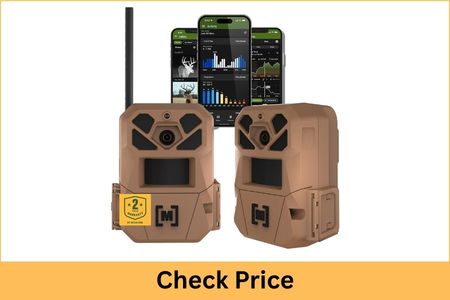
I received the two-camera package on schedule. Both units arrived securely packed with mounting straps, batteries, and setup materials. The cameras looked well-built, compact, and ready for outdoor installation.
Camera & Image Quality: I found the 40MP photos sharp and detailed, while 1080p video provides clear footage with sound. Daytime images show good color and useful wildlife detail. The dual-lens system and high-resolution mode help capture moving animals, while three-shot burst and on-demand captures provide additional chances for clear images.
Night Vision & Motion Detection: The low-glow 850nm infrared system reaches 100 feet and keeps nighttime images clear without noticeably disturbing deer. Its 0.5-second trigger responds quickly to movement, while adjustable sensitivity helps manage detection. Moultrie AI filters many vegetation and wind triggers, and the 100-foot detection range provides broad coverage for active wildlife.
Connectivity, App & Remote Monitoring: The cellular system automatically selects among four major networks, while the Moultrie Mobile app sends photos and alerts to my phone. I can adjust settings, check battery status, use GPS mapping, and request photos or videos remotely. The camera requires an active cellular subscription for full remote monitoring.
Battery, Solar Power & Storage: Each camera uses AA batteries and supports optional lithium packs or solar panels for longer deployment. Battery life varies with transmission and detection activity. A microSD card up to 512GB provides local backup, but storage cards are not included with the cameras.
Build Quality & Outdoor Performance: The weather-sealed housing feels durable for extended outdoor use. The recessed dual-lens design protects the optics, while the Pine Bark finish blends naturally into wooded surroundings. Integrated straps simplify mounting, and cable-lock compatibility adds security. The external antenna also supports cellular communication in field locations.
Features, Ease of Use & Overall Value: Setup is straightforward through the Moultrie app, with Live Aim helping me position each camera accurately. AI buck detection, GPS mapping, activity tracking, remote settings, burst photography, and feeder controls add useful functionality. The two-pack costs $99.99, but cellular service adds ongoing expense. The combination suits hunters managing multiple locations.
Best For: I would choose this wildlife camera for deer for hunters, wildlife watchers, and landowners managing multiple outdoor locations who want AI alerts, cellular access, GPS mapping, and remote camera control from their phones.
Pros
- Detailed 40MP photo quality
- Fast 0.5-second trigger
- 100-foot night vision range
- Four-carrier automatic network selection
- AI buck detection alerts
- Built-in GPS camera mapping
- Bluetooth Live Aim feature
- Two-camera package offers value
Cons
- Cellular subscription is required
- SD cards sold separately
- Connectivity varies by location
5. SPYPOINT FLEX-M Cellular GPS Night Vision Dual SIM LTE Wildlife Camera for Deer

I found the 28MP photos useful for routine wildlife monitoring, with clear results at closer distances and enough detail for identifying animals. Daytime images generally looked crisp, while 720p video included sound for added context. I noticed image detail dropped as subjects moved farther away, especially near the camera’s 90-foot detection range. The camera also supports photo, video, Time-Lapse, and Time-Lapse+ modes, giving me flexibility for different monitoring situations.
Night Vision & Motion Detection: The low-glow 850nm infrared system reaches about 90 feet and records nighttime activity in black and white. Its 0.4-second trigger responds quickly, while adjustable sensitivity helps reduce false activations from wind and vegetation. The faint infrared glow is visible when active, so it is less discreet than a no-glow camera. Three-shot burst capture helps with moving wildlife.
Connectivity, App & Remote Monitoring: Dual-SIM LTE automatically selects available networks without manual carrier changes. The SPYPOINT app sends photos remotely, tracks GPS location, shows weather and battery status, and allows settings changes. A free plan includes up to 100 photos monthly, while paid options start at $5. Wi-Fi is not required.
Battery, Solar Power & Storage: The camera uses eight AA batteries or an optional rechargeable lithium pack. Runtime varies significantly with cellular activity and trigger frequency. Compatible solar panels are sold separately. A microSD card is also optional, supporting local backup alongside cloud storage.
Build Quality & Outdoor Performance: The IP65 housing provides protection against dust and rain, making it suitable for outdoor deployment. The camo-style plastic body and recessed lens fit naturally into wooded surroundings. The included adjustable tree strap holds the camera securely, although some customers reported latch and reliability problems with individual units.
Features, Ease of Use & Overall Value: I found the mobile activation and app controls straightforward. Constant Capture lets the camera transmit while continuing to capture images, while GPS mapping, weather information, species filtering, remote settings, and multiple capture modes add useful functionality. The free photo plan keeps initial costs low, but batteries, SD storage, and paid cellular plans add expenses for heavier use.
Best For: I would choose this wildlife camera for deer for budget-conscious hunters and wildlife watchers who want cellular photo delivery, GPS tracking, multi-carrier connectivity, and a free monthly photo allowance across two cameras.
Pros
- 28MP photo resolution
- Fast 0.4-second trigger
- Dual-SIM cellular connectivity
- Free 100-photo monthly plan
- Built-in GPS tracking
- Remote app settings control
- Multiple capture modes
- IP65 weather resistance
Cons
- Batteries not included
- SD card sold separately
- Reliability concerns reported
6. TACTACAM Reveal Pro 3.0 4G LTE 4K GPS Wildlife Camera for Deer

I received the camera on schedule in a secure package. Inside were the camera, antenna, tree strap, and battery tray. The unit looked rugged, compact, and ready for field installation.
Camera & Image Quality: I found the 4K photos clear and detailed, with 1080p video providing useful footage for wildlife observation. Daytime images showed good clarity, while customer feedback also praised the nighttime image quality. The 2-inch LCD makes local aiming easier, and burst mode helps capture multiple frames of moving wildlife.
Night Vision & Motion Detection: The no-glow infrared flash captures nighttime activity without visibly alerting deer. Its 96-foot night range provides useful coverage after dark, while the top-mounted PIR sensor responds to movement with adjustable sensitivity. I could lower sensitivity to reduce squirrel and vegetation triggers, and burst mode gives additional chances to capture active animals.
Connectivity, App & Remote Monitoring: The 4G LTE auto-connect system works with multiple carriers, including Verizon and AT&T, and the REVEAL app sends motion photos to my phone. I can use GPS tracking, remote photo requests, Wi-Fi aiming, and firmware updates. On-demand video requires the paid Xtra subscription, while cellular service is required for camera operation.
Battery, Solar Power & Storage: The camera uses 12 AA batteries, which are sold separately, and actual runtime varies with activity, signal, weather, and settings. I can add a TACTACAM solar panel or lithium cartridge for longer deployments. An optional 32GB Class 10 U3 SD card is supported, but cellular service is required for local recording.
Build Quality & Outdoor Performance: I found the rugged housing suitable for extended outdoor placement, with a recessed lens, external articulating antenna, dual side latches, and a secure strap system. The tan and coyote-brown finish blends into outdoor surroundings. The lock slot also provides an option for added physical security in exposed locations.
Features, Ease of Use & Overall Value: Setup is simple, and the LCD helps with aiming before deployment. I can manage settings through the REVEAL app, receive motion alerts, request photos, track GPS location, and install updates remotely. The required cellular plan and optional Xtra subscription increase ongoing costs. At $99.99, it suits serious hunters and property owners prioritizing cellular monitoring.
Best For: I would choose it as a wildlife camera for deer for serious hunters, landowners, and wildlife watchers with dependable cellular coverage who want 4K photos, GPS tracking, remote alerts, and solar-compatible long-term monitoring.
Pros
- Clear 4K photo quality
- No-glow infrared night vision
- 96-foot night vision range
- Automatic multi-carrier LTE connection
- Built-in GPS tracking
- Convenient 2-inch LCD screen
- Optional SD card backup
- Solar panel compatibility
Cons
- Requires paid cellular service
- Battery life varies considerably
- No live video streaming
7. SPYPOINT FLEX-M 28MP Cellular 3-Pack LTE Wildlife Camera for Deer
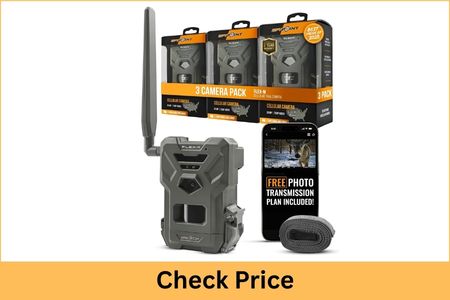
I got the three-camera pack on schedule in a compact retail package. Inside were the three cameras and their included setup materials. The units looked rugged and designed for outdoor use, although the microSD cards and batteries need to be purchased separately.
Camera & Image Quality: I found the 28MP photos useful for general wildlife monitoring, although customer feedback on sharpness is mixed. Some images look clear during both day and night, while others appear soft or blurry. The camera records 720p video with sound, giving me useful footage when I need more context around animal activity. For wildlife camera for deer use, the image quality works for basic scouting, but it is not consistently sharp for every user.
Night Vision & Motion Detection: The low-glow infrared system provides nighttime coverage up to 90 feet, while the 0.4-second trigger responds quickly when animals enter the detection area. I found the motion capture responsive for monitoring larger outdoor spaces. The system is designed to detect activity efficiently, although inconsistent cellular transmission can affect whether captured images reach the app.
Connectivity, App & Remote Monitoring: The camera uses LTE cellular connectivity with pre-activated dual SIM coverage and automatically handles carrier selection. The SPYPOINT app sends photos to phones, tablets, and computers without Wi-Fi. I can remotely change settings, update firmware, view maps, check weather, and use BUCK TRACKER AI. A free plan covers 100 photos monthly, while paid plans start at $5.
Battery, Solar Power & Storage: The camera runs on eight AA batteries or an optional LIT-22 rechargeable lithium pack. Battery life varies significantly with usage, ranging from around two weeks to several months in customer experiences. It supports optional solar charging. A microSD card up to 512GB is supported, but the card is not included.
Build Quality & Outdoor Performance: The IP65 housing provides protection against outdoor moisture and dust, while the rugged angular body is designed for hunting and wildlife monitoring. I found the integrated mounting loops practical for tree installation. Customer experiences with durability and reliability are mixed, including reports of cameras stopping transmission or recording after extended use.
Features, Ease of Use & Overall Value: Activation is handled through the SPYPOINT app, while on-camera buttons simplify microSD formatting and test photos. I can choose photo, video, Time-Lapse, or Time-Lapse+ modes, and Constant Capture allows sending and recording simultaneously. The free 100-photo plan is a strong advantage, especially for budget-conscious users. At $115.99 for three cameras, it offers an inexpensive way to monitor multiple locations, though battery and reliability concerns should be considered.
Best For: I would choose it for budget-conscious hunters, wildlife watchers, and landowners who want multiple cellular cameras, remote photo delivery, cross-carrier coverage, and a free monthly transmission option without relying on Wi-Fi.
Pros
- Convenient three-camera value pack
- 28MP photo resolution
- Fast 0.4-second trigger
- 90-foot night vision range
- Cross-carrier cellular coverage
- Free 100-photo monthly plan
- Remote app-based camera controls
- Multiple capture modes
Cons
- Image sharpness receives mixed reviews
- Battery life varies considerably
- Reliability complaints from customers
8. GARDEPRO E5S 64MP 1296P No Glow Night Vision Motion Activated Wildlife Camera for Deer

I received the two-camera pack on schedule in a secure package. Inside were two cameras, USB cables, mounting straps, and instruction manuals. The camouflage-brown units looked rugged and ready for outdoor installation.
Camera & Image Quality: I found the 64MP photos highly detailed, while 1296P HD video provides clear footage for wildlife observation. The optical lens and image sensor capture useful detail, and recorded video includes audio. The 2-inch LCD screen also lets me review photos and videos directly without relying on another device.
Night Vision & Motion Detection: The 940nm no-glow infrared system provides nighttime coverage up to 100 feet without visibly alerting wildlife. Three PIR sensors cover a 120-degree detection area, while the 0.1-second trigger reacts quickly to moving animals. Motion Detection, Time-Lapse, and Hybrid modes give me flexibility for monitoring trails, feeding areas, and property.
Connectivity, App & Remote Monitoring: This is a non-cellular, non-Wi-Fi camera with no Bluetooth or companion app. It operates independently and stores recordings on an SD card. I cannot receive alerts or view footage remotely, but the lack of wireless connectivity eliminates subscription fees and keeps the camera’s operation simple.
Battery, Solar Power & Storage: Each camera uses eight AA batteries, which are not included. I can add the GardePro SP350 solar panel for extended outdoor operation. The camera supports standard SD, SDHC, and SDXC cards up to 512GB. Loop recording automatically replaces older files when storage fills.
Build Quality & Outdoor Performance: The IP66 housing provides protection against rain, dust, and demanding outdoor conditions. The rugged camouflage body is designed for temperatures from -4°F to 140°F. I like the 1/4-inch mounting thread and included nylon strap because they give me secure options for trees, posts, or fences.
Features, Ease of Use & Overall Value: Setup is straightforward because there is no app, network, or cellular activation to manage. I can choose motion detection, time-lapse, or hybrid recording and review files on the built-in screen. The two-camera package costs $129.99, with no recurring subscription fees. Batteries, SD cards, and the optional solar panel add to the initial expense.
Best For: I would choose this wildlife camera for deer for hunters, property owners, and wildlife watchers who want fast triggers, detailed images, no subscription fees, and reliable standalone monitoring across multiple outdoor locations.
Pros
- Detailed 64MP photo resolution
- Clear 1296P HD video
- Fast 0.1-second trigger
- 100-foot no-glow night vision
- Wide 120-degree detection coverage
- Durable IP66 weather protection
- Supports 512GB SD cards
- Includes two trail cameras
Cons
- No cellular remote monitoring
- Batteries are not included
- SD cards sold separately
9. FARGARLOO 4K 60MP Solar WiFi 0.1s Trigger 7800mAh IP66 Wildlife Camera for Deer

I received the camera on schedule in a compact package. Inside were the camera, 32GB SD card, mounting belt, stand, bracket, screws, USB Type-C cable, power cable, and manual. The gray unit looked compact and ready for outdoor placement.
Camera & Image Quality: I found the 60MP photos and 4K video detailed enough to show useful wildlife features from a distance. Daytime images provide clear detail, while the built-in 2-inch screen lets me check recordings in the field. Video also records audio, and color night vision adds another viewing option when lighting allows.
Night Vision & Motion Detection: The low-glow infrared system provides nighttime coverage up to 65 feet while keeping the camera relatively discreet around wildlife. Its 0.1-second trigger responds quickly to fast-moving animals entering the detection area. The 120-degree PIR sensor gives broad coverage, while three sensitivity levels and customizable detection zones help reduce triggers from leaves, insects, and other background movement. For a wildlife camera for deer, this combination gives me quick capture without requiring constant manual adjustment.
Connectivity, App & Remote Monitoring: The camera creates its own Wi-Fi hotspot and connects to the dedicated app within roughly 60 feet. I can preview footage, browse recordings, and download files nearby. It is not cellular, so there are no long-distance alerts or true remote monitoring, and no subscription is required.
Battery, Solar Power & Storage: The built-in 7800mAh rechargeable battery works with the included 3.5W solar panel and Type-C charging. A 9V backup battery is also included. The manufacturer rates it for more than 30 days in overcast conditions. A pre-installed 32GB microSD card is included, with support for up to 128GB.
Build Quality & Outdoor Performance: The IP66-rated ABS housing is designed to handle rain, dust, snow, and temperatures from -4°F to 140°F. I found the low-profile gray body suitable for discreet outdoor placement. The included mounting belt, stand, bracket, and screws give me several installation options for trees and other outdoor locations.
Features, Ease of Use & Overall Value: Setup is simple through the camera controls and local app connection. I can use motion detection, customize detection zones, preview footage, and download recordings without removing the SD card. There are no subscription fees or cloud storage costs. At $54.99, the included solar panel, 7800mAh battery, 32GB card, 4K video, and 60MP photos make it a strong budget option for regular-access wildlife monitoring.
Best For: I would choose it for budget-conscious hunters, wildlife watchers, and property owners who visit their cameras regularly and want solar charging, fast motion capture, local app access, and no recurring fees.
Pros
- Detailed 60MP photo resolution
- Clear 4K video recording
- Very fast 0.1-second trigger
- Included 3.5W solar panel
- Large 7800mAh rechargeable battery
- Includes 32GB SD card
- IP66 outdoor protection
- No subscription fees
Cons
- No cellular remote monitoring
- Limited 60-foot Wi-Fi range
- Low-glow infrared is visible
10. SPYPOINT FLEX-S-DARK 40MP Solar Cellular 1080p No Glow Wildlife Camera for Deer
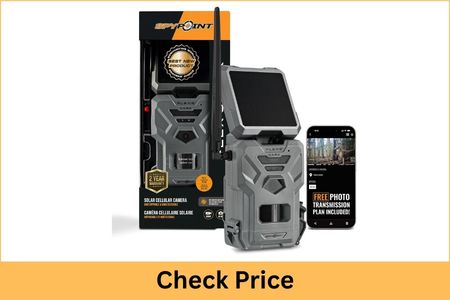
I got the camera on schedule in a sturdy package. Inside were the camera and setup materials, with the solar-powered unit looking solid and ready for outdoor installation. The flip-up screen and integrated solar panel stood out immediately during unboxing.
Camera & Image Quality: The 40MP photos provide strong detail, while 1080p video records sound for useful wildlife footage. I like having the flip-up 2-inch LCD because I can review captures directly in the field. Date, time, temperature, and moon phase overlays add useful information. As a wildlife camera for deer, the resolution is well suited to scouting and observing game, although some users report delayed or missing photo transmissions.
Night Vision & Motion Detection: The no-glow infrared system reaches 100 feet and keeps nighttime operation discreet around wildlife. I can also switch between no-glow and low-glow modes through the app. The 0.3-second trigger responds quickly to movement, while adjustable sensitivity helps control unnecessary captures. Customer feedback on the no-glow performance is particularly strong.
Connectivity, App & Remote Monitoring: The camera uses 4G LTE with automatic cross-carrier connectivity and works through the SPYPOINT app. I can receive photos, request on-demand captures, use live streaming, adjust settings, track GPS location, and filter species. A free plan includes 100 photos monthly, while paid options provide higher limits. Connectivity feedback remains mixed.
Battery, Solar Power & Storage: The built-in rechargeable lithium battery works with the integrated solar panel and can provide up to 11 months of runtime with solar assistance. I can also use an optional LIT-22 battery pack. Local recording supports microSD cards up to 512GB, while cloud storage depends on the selected plan.
Build Quality & Outdoor Performance: The reinforced ghost-grey housing feels suitable for rugged outdoor deployment. Its weather-resistant construction, semi-flexible external antenna, and upgraded latch support field use. Integrated side slots make tree mounting practical. The exact waterproof rating is not specified, so I would rely on its weather-resistant construction rather than assume a specific IP rating.
Features, Ease of Use & Overall Value: Setup is handled through the SPYPOINT app, and the camera provides live streaming, Instant Mode requests, time-based photo organization, GPS mapping, and species filters. The built-in solar panel reduces routine battery maintenance. The free photo plan helps control operating costs, but the higher purchase price and mixed reliability feedback make it better suited to serious users with strong cellular coverage.
Best For: I would choose it for hunters, wildlife enthusiasts, and property owners who want solar-powered cellular monitoring, discreet night capture, live access, and long unattended operation in areas with dependable cellular coverage.
Pros
- High-resolution 40MP photos
- Built-in rechargeable solar power
- 100-foot no-glow night vision
- Fast 0.3-second trigger
- Live streaming support
- GPS location tracking
- Free 100-photo monthly plan
- Two-year warranty
Cons
- Connectivity reliability remains inconsistent
- Some photo delivery delays
- Higher purchase price
FAQs About the Best Wildlife Camera for Deer
Question: What resolution should I look for in a wildlife camera for deer?
Answer: A camera with 20MP or higher photos provides useful detail for identifying deer, while 1080p or 4K video helps capture movement clearly during daytime monitoring.
Question: Is no-glow night vision important for deer cameras?
Answer: Yes. No-glow infrared keeps nighttime illumination discreet, reducing visible disturbance while capturing deer activity. A range around 80 to 100 feet provides useful coverage for trails.
Question: How fast should a deer camera trigger?
Answer: A trigger speed under 0.5 seconds is ideal for moving deer. Faster triggers increase the chance of capturing animals before they leave the camera’s detection area.
Question: Do deer cameras need cellular connectivity?
Answer: Cellular connectivity is useful when you want photos delivered remotely. Standalone cameras work well when you regularly visit the location and can retrieve recordings directly.
Question: How long do trail camera batteries last?
Answer: Battery life varies with photo frequency, nighttime recording, cellular transmission, weather, and battery type. Solar panels or rechargeable lithium batteries can significantly extend operating time.
Question: What storage capacity is best for deer cameras?
Answer: A 32GB or larger microSD card suits most users. Higher-capacity cards are useful for frequent video recording, long deployments, or locations with heavy wildlife activity.
Question: Can a trail camera record deer videos with sound?
Answer: Yes. Cameras supporting video with audio can record deer movement alongside environmental sounds. This provides additional context when reviewing wildlife activity around trails or feeding areas.
Question: What detection range is suitable for deer monitoring?
Answer: A detection range of 60 to 100 feet works well for most deer trails. Wider detection coverage can also help capture animals approaching from different directions.
Question: Are solar-powered deer cameras worth buying?
Answer: Solar-powered models reduce battery changes and are useful for remote locations. They work best where the panel receives adequate sunlight and can maintain the rechargeable battery between charging cycles.
Question: Can I use a deer camera for property security?
Answer: Yes. Motion detection, nighttime coverage, timestamps, and cellular alerts can help monitor gates, driveways, farms, and remote property when the camera supports remote connectivity.