Choosing the best wildlife camera for backyard monitoring depends on image quality, night vision, trigger speed, connectivity, battery life, and outdoor durability. I compared several models ranging from simple standalone cameras to cellular options with app access, GPS, and AI features. Some prioritize fast triggers and wide detection angles, while others offer remote monitoring and multi-camera coverage. Battery requirements, SD storage, subscription costs, and weather protection also vary, so the right choice depends on how and where you plan to monitor wildlife.
Here is a Comparison Table of the Best Wildlife Camera for Backyard: Our Top 3 Picks
| Feature | MAXDONE 4K | TACTACAM Reveal X 3.0 | MEIDASE P70 |
| Resolution | 4K / 64MP | 4K photo / 1080p video | 64MP / 1296p |
| Connectivity | WiFi + Bluetooth | Cellular LTE | Non-cellular |
| Night Vision | IR | Night vision | No-glow IR |
| Trigger Speed | Motion activated | Motion activated | Motion activated |
| Power | 6000mAh | 6+ months | Battery powered |
| Weather Rating | IP66 | IP66 | Waterproof |
| Best For | Backyard monitoring | Remote monitoring | Local wildlife viewing |
Best Wildlife Camera for Backyard – Full List
- MAXDONE Solar 4K 64MP WiFi Camera Wildlife Camera for Backyard – Best-Value
- TACTACAM Reveal X 3.0 4K Cellular Camera Wildlife Camera for Backyard – Best-Selling
- MEIDASE P70 64MP No-Glow Camera Wildlife Camera for Backyard – Best-Budget
- MOULTRIE Edge 3 40MP Cellular Camera Wildlife Camera for Backyard – Top-Rated
- SPYPOINT Flex-M Twin Pack 28MP Cellular Cameras Wildlife Camera for Backyard – Best-Affordable
- TACTACAM Reveal Pro 3.0 4K Cellular Camera Wildlife Camera for Backyard – Pro-Quality
- SPYPOINT Flex-M 3-Pack 28MP Cellular Cameras Wildlife Camera for Backyard – Budget-Friendly
- GARDEPRO E5S 64MP No-Glow Cameras Wildlife Camera for Backyard – High-Quality
- KJK 36MP 2.7K Wide-Angle Camera Wildlife Camera for Backyard – Low-Priced
Best Wildlife Camera for Backyard
1. MAXDONE Solar Trail 4K 64MP WiFi Bluetooth Night Vision Wildlife Camera for Backyard
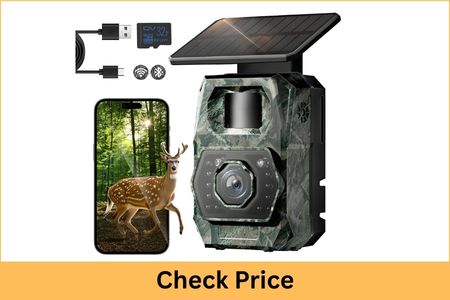
I received the camera on schedule in a sturdy package. Inside were the camera, solar panel, mounting accessories, Type-C cable, and 32GB SD card. Everything arrived secure and ready.
Camera & Image Quality: I found the 4K video and 64MP photos sharp, with clear daytime detail and natural-looking colors. The 30fps video kept moving wildlife recognizable without obvious blur. Built-in audio with noise reduction recorded forest sounds clearly. Custom timestamps also let me add date, time, and temperature information to recordings.
Night Vision & Motion Detection: The 940nm infrared system keeps nighttime operation discreet while covering up to 65 feet. I found the clearest nighttime details within roughly 25 to 50 feet. The 0.1-second trigger speed caught fast-moving animals quickly. Adjustable sensitivity and detection zones helped reduce unwanted triggers from surrounding movement.
Connectivity, App & Remote Monitoring: The camera uses Wi-Fi and Bluetooth through TrailCamGO rather than household Wi-Fi. It creates its own hotspot for setup, live view, settings, and file transfers. The app monitors battery, SD usage, and temperature, but remote access only works within wireless range.
Battery, Solar Power & Storage: The 6000mAh rechargeable battery supports solar and Type-C charging, while the adjustable split panel improves sun exposure. A pre-installed 32GB microSD card stores footage, with support for up to 256GB and no cloud or subscription fees.
Build Quality & Outdoor Performance: The IP66 housing handles rain, humidity, dust, and demanding outdoor conditions. I liked the compact greige body and protective rubber covers around the ports. The included tree strap and wall mount simplified installation, while the separate solar panel allowed more flexible positioning around trees and structures.
Features, Ease of Use & Overall Value: Setup through TrailCamGO was straightforward, and the live view helped me position the camera accurately. Motion detection, scheduled shooting, time-lapse, and five-shot burst modes cover different monitoring needs. I could download files directly to my phone without removing the card. With solar charging, included storage, no monthly fees, and strong imaging, it offers solid value for hunters, wildlife watchers, and property owners.
Best For: I would choose it as a wildlife camera for backyard monitoring, hunting, farm surveillance, and wildlife observation where solar charging and local storage matter more than cellular remote access.
Pros
- Sharp 4K video quality
- Detailed 64MP photo capture
- Fast 0.1-second trigger speed
- Adjustable split solar panel
- Large 6000mAh rechargeable battery
- Includes pre-installed 32GB card
- No monthly subscription fees
- Durable IP66 weather protection
Cons
- No household Wi-Fi support
- No cellular remote monitoring
- Short-range hotspot connectivity
2. TACTACAM Reveal X 3.0 Cellular 4K Photo Multi-Carrier LTE Waterproof Wildlife Camera for Backyard

I received the camera on schedule in a well-protected package. The tan-camo unit, pre-installed antenna and SIM, mounting strap, and required setup materials arrived safely. It looked durable and ready for outdoor use.
Camera & Image Quality: I found the 4K photos detailed enough for identifying wildlife, while 1080p video at 30fps delivered clear Full HD footage. The camera records audio with video, and three-shot burst mode helps keep moving animals centered. Date, time, temperature, and location data can also appear on captured images.
Night Vision & Motion Detection: For a wildlife camera for backyard monitoring, I liked the 940nm low-glow infrared system because it keeps nighttime operation discreet. It reaches up to 96 feet, while the sub-half-second trigger responds quickly to moving animals. Three-shot burst captures additional frames, and adjustable sensitivity helps control false triggers, which some users reported.
Connectivity, App & Remote Monitoring: The camera uses LTE and automatically connects between AT&T and Verizon based on available signal. The REVEAL app sends motion photos to my phone, provides GPS tracking, remote settings, alerts, and multi-camera management. Cellular service requires a paid monthly plan.
Battery, Solar Power & Storage: It uses 12 AA batteries, which are not included. Real-world feedback ranges from two to three weeks, while optimized setups can reach six-plus months. Optional lithium, solar, and battery-belt accessories extend runtime. Built-in storage eliminates the need for an SD card.
Build Quality & Outdoor Performance: The IP66 housing is designed for demanding outdoor conditions, and customer feedback reports reliable operation through rain and snow. The tan-camo finish provides field concealment, while the included tree strap simplifies mounting. The pre-installed antenna and weatherproof seals support dependable outdoor placement. Built-in GPS also helps track camera location.
Features, Ease of Use & Overall Value: Setup was simple because the SIM and antenna arrive installed, and the REVEAL app handles configuration. I get motion alerts, GPS tracking, remote settings, three-shot bursts, and optional on-demand video with higher plans. There is no activation fee or contract, but subscription costs continue after purchase. It suits serious hunters, wildlife researchers, and property managers who need remote cellular monitoring.
Best For: I would pick it for serious hunters, wildlife researchers, and property owners who need reliable cellular alerts, GPS tracking, and remote monitoring in locations without Wi-Fi.
Pros
- Excellent 4K photo quality
- Clear 1080p video recording
- Fast sub-half-second trigger
- 96-foot nighttime detection range
- Multi-carrier LTE connectivity
- Built-in GPS location tracking
- No SD card required
- IP66 weather-resistant construction
Cons
- Requires ongoing subscription payments
- Batteries are not included
- Optional accessories increase operating costs
3. MEIDASE P70 Non-Cellular 64MP 1296p No-Glow Motion Activated Waterproof Wildlife Camera for Backyard
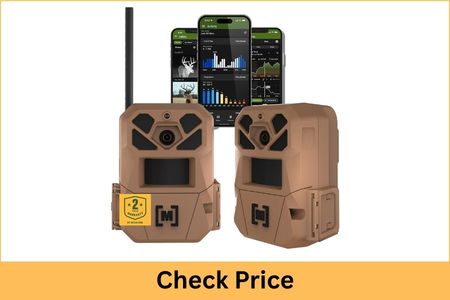
I received the camera on schedule in a compact package. Inside were the P70, mounting strap, USB cable, and instructions. The camouflage housing looked sturdy, clean, and ready for outdoor placement.
Camera & Image Quality: I found the 64MP photos sharp and detailed, while 1296p video at 30fps kept moving wildlife recognizable. Daytime images showed clear detail and generally good color. The f/1.6 lens and CMOS sensor helped capture low-light scenes. Video also includes sound, and adjustable resolutions provide useful storage flexibility.
Night Vision & Motion Detection: The 940nm no-glow infrared system uses 46 LEDs and reaches up to 100 feet. I found the 0.1-second trigger speed especially useful for fast-moving animals. Three PIR sensors provide 120° detection coverage, with side sensors helping prepare the camera before subjects reach the center. Sensitivity is adjustable, though nighttime clarity received mixed customer feedback.
Connectivity, App & Remote Monitoring: The camera has no Wi-Fi, Bluetooth, or cellular connection, so there is no app, remote viewing, or notification system. I could review recordings directly on the 2.4-inch color LCD or transfer files through USB or the SD card. There are no recurring connectivity costs.
Battery, Solar Power & Storage: The P70 uses eight AA batteries, which are sold separately. Photo use can provide long runtime, while frequent video and infrared recording drain batteries faster. It supports up to 512GB SD cards and works with the optional SP350 solar panel through its 12V/1A port.
Build Quality & Outdoor Performance: The camouflage ABS housing and recessed lens suit outdoor placement, while the IP66 rating provides protection against dust and water jets. I liked the included six-foot mounting strap and 1/4-inch tripod socket. Customer feedback praises the sturdy construction, but some users reported moisture entering the battery compartment during wet conditions.
Features, Ease of Use & Overall Value: I found the menu and physical controls simple to operate, with the 2.4-inch screen making on-site playback convenient. Photo, video, and photo-then-video modes cover different monitoring needs, while time stamps show useful recording details. For a wildlife camera for backyard monitoring, the 0.1-second trigger, no-glow night vision, solar compatibility, and no subscription costs make this a practical budget option for hunters and property owners.
Best For: I would choose it for budget-conscious hunters, wildlife watchers, farmers, and property owners who need local recording, fast motion capture, and no recurring connectivity fees.
Pros
- Sharp 64MP photo resolution
- Clear 1296p video recording
- Fast 0.1-second trigger
- 100-foot no-glow night vision
- Triple PIR motion sensors
- 2.4-inch color LCD
- Supports solar power
- One-year manufacturer warranty
Cons
- Batteries sold separately
- SD card sold separately
- No remote monitoring
4. MOULTRIE Edge 3 Cellular 40MP 0.5s Trigger GPS 1080p Video Wildlife Camera for Backyard
I got the two-camera package on schedule in a compact retail box. Both units and mounting straps were securely packed, and the pine-bark camouflage finish looked sturdy and field-ready.
Camera & Image Quality: I found the 40MP photos detailed enough for identifying deer and other wildlife, while 1080p video at 30fps produced clear footage with recorded sound. Daytime images showed strong detail and natural-looking color. The dual-lens autofocus system helped keep subjects sharp, while HD photos upload automatically and full-resolution images can be requested through the app. For a wildlife camera for backyard monitoring, the image quality gives me useful detail without requiring physical card retrieval.
Night Vision & Motion Detection: The low-glow 940nm infrared system reaches up to 100 feet and keeps nighttime activity visible without strongly disturbing wildlife. Its 0.5-second trigger captures most moving animals quickly. The 50° detection view is more focused than wide-angle designs. Adjustable sensitivity helps control triggers, while Moultrie AI can filter unwanted activity under the Pro plan.
Connectivity, App & Remote Monitoring: The 4G LTE system automatically selects among four major U.S. carriers without requiring a separate SIM card. Through the Moultrie Mobile app, I can receive photos, request on-demand captures, check GPS location, monitor battery and signal levels, and adjust settings remotely. A subscription is required for cellular service.
Battery, Solar Power & Storage: Each camera uses eight AA batteries, with lithium options recommended for cold weather. Rechargeable power packs and solar panels are available separately. There is no SD card slot, so recordings use cloud storage through the cellular service and its subscription plan.
Build Quality & Outdoor Performance: The ABS housing uses weatherproof construction with sealed access areas and a pine-bark camouflage finish. I found the included straps useful for tree mounting, while the security lock port adds protection against tampering. Field testing reported reliable operation through rain and wind, though Moultrie does not publish a specific IP rating.
Features, Ease of Use & Overall Value: Setup and daily control are handled through the Moultrie Mobile app, with Live Aim helping position each camera accurately. I can use photo, video, motion, and on-demand modes, plus GPS mapping, activity tracking, and AI buck detection. The cellular service adds recurring costs, but remote access makes the two-pack valuable for hunters and property owners managing multiple locations.
Best For: I would choose this two-camera setup for hunters, wildlife watchers, and property owners who need cellular alerts, GPS mapping, remote settings, and automatic photo delivery without visiting each camera regularly.
Pros
- Detailed 40MP wildlife photos
- Clear 1080p video recording
- Fast 0.5-second trigger
- Four-carrier network auto-connect
- Built-in GPS mapping
- AI buck detection
- Remote app controls
- Two cameras included
Cons
- Cellular subscription required
- No local SD storage
- Narrow 50° viewing angle
5. SPYPOINT Flex-M Twin Pack 28MP Dual-SIM LTE GPS Night Vision Wildlife Camera for Backyard

I received the twin-pack on schedule in a compact retail package. Both cameras, mounting straps, and included components were securely arranged inside. The olive-green camouflage finish looked sturdy and ready for field use.
Camera & Image Quality: I found the 28MP photos capable of capturing useful wildlife detail, while 720p videos include sound for added context. Daytime images were generally clear, though customer feedback reports some blurry or fuzzy captures. The camera offers adjustable image quality and Constant Capture technology, allowing it to record and transmit activity simultaneously.
Night Vision & Motion Detection: The low-glow 850nm infrared system reaches about 90 feet and provides useful nighttime coverage. I found the 0.4-second trigger responsive enough for moving wildlife. Three sensitivity levels let me adjust detection based on the surroundings. Small animals, vegetation, and wind can still cause unwanted triggers when sensitivity is set too high.
Connectivity, App & Remote Monitoring: The dual-SIM LTE system automatically switches between available networks without Wi-Fi. Through the SPYPOINT app, I can receive photos, adjust settings, update firmware, check GPS location, monitor battery status, and use BUCK TRACKER AI. Photo delivery can take several hours depending on network and plan.
Battery, Solar Power & Storage: Each camera uses eight AA batteries, sold separately, or the optional rechargeable lithium pack. Solar panels can extend operating time. A microSD card is also required for local recording and is sold separately, with support for capacities up to 512GB.
Build Quality & Outdoor Performance: The IP65 wildlife camera for backyard housing protects against dust and water jets, making it suitable for normal outdoor exposure. The olive-green camouflage helps it blend into wooded surroundings, while the included adjustable straps simplify tree mounting. Customer feedback on durability is mixed, with some users reporting cameras stopping after days or months.
Features, Ease of Use & Overall Value: I found the on-camera controls and mobile activation straightforward, while the SPYPOINT app handles remote settings, firmware updates, GPS mapping, weather information, and BUCK TRACKER AI. Photo, video, Time-Lapse, and Time-Lapse+ modes provide flexible monitoring. The free 100-photo monthly plan helps reduce recurring costs, although paid plans start at $5 per month per camera. For hunters and property owners who want cellular monitoring without Wi-Fi, the twin pack offers useful features at a reasonable entry price, but the reported reliability issues and slow photo delivery reduce its overall value.
Best For: I would choose it for budget-conscious hunters, wildlife watchers, and property owners who need cellular monitoring, GPS tracking, and local SD storage. It suits users comfortable with delayed photo delivery and variable battery performance.
Pros
- 28MP wildlife photo resolution
- Responsive 0.4-second trigger
- Dual-SIM LTE connectivity
- Free 100-photo monthly plan
- Built-in GPS tracking
- BUCK TRACKER AI filtering
- Supports local microSD storage
- Two cameras included
Cons
- Photo delivery can be slow
- Image quality receives mixed feedback
- Reliability concerns reported
6. TACTACAM Reveal Pro 3.0 Cellular 4K Photo GPS No-Glow Solar Compatible Wildlife Camera for Backyard
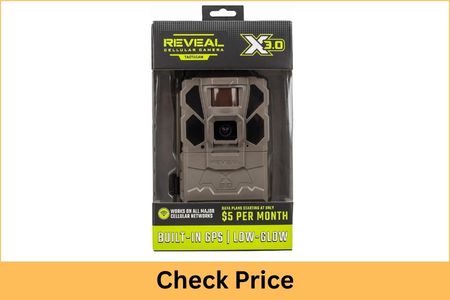
I received the camera on schedule in a compact package. The unit, mounting hardware, and included components were securely packed. Its tan camouflage housing looked sturdy, with a practical design suited to outdoor placement.
Camera & Image Quality: I found the 4K HD photos detailed enough for identifying wildlife, while 1080p video at 30fps provided clear footage with sound. Daytime images showed strong detail and useful color, although some customers reported blurry captures at greater distances. Burst mode helps record several images quickly when animals move through the frame.
Night Vision & Motion Detection: The no-glow 850nm infrared system reaches about 96 feet and keeps nighttime operation discreet. I found the motion sensor responsive, with adjustable sensitivity helping control unwanted triggers. The dual infrared panels provide useful nighttime coverage, while burst capture helps record animals moving quickly through the detection area.
Connectivity, App & Remote Monitoring: The camera uses 4G LTE with automatic carrier selection and a built-in SIM. The REVEAL app provides photo delivery, GPS tracking, remote settings, battery and signal monitoring, and on-demand captures. Photos typically arrive in about one minute. Cellular service requires a paid subscription.
Battery, Solar Power & Storage: The camera requires 12 AA batteries, which are sold separately, and battery life varies with cellular transmissions, infrared use, and capture frequency. Rechargeable lithium packs are supported. Solar panels can extend runtime significantly, while the optional SD card provides local backup alongside built-in memory and cellular storage.
Build Quality & Outdoor Performance: The weather-resistant housing carries an IP66 rating and wildlife camera for backyard uses sealed construction for outdoor conditions. I liked the recessed lens, integrated tree strap mount, and security lock slot. The external antenna helps cellular reception, while customer feedback describes the camera as solid and reliable through rain, snow, and extended outdoor use.
Features, Ease of Use & Overall Value: I found the setup and controls straightforward, with the 2-inch LCD helping with field adjustments and local aiming. The camera offers burst mode, motion capture, GPS, on-demand video, built-in Wi-Fi aiming, and optional SD backup. The required cellular plan adds ongoing cost, but the roughly one-minute photo delivery, 4K images, and reliable construction make it valuable for serious hunters and property managers who need fast remote updates.
Best For: I would choose it for serious hunters, property managers, and wildlife watchers who prioritize fast cellular photo delivery, high-resolution images, GPS tracking, and remote monitoring over low operating costs.
Pros
- Detailed 4K HD photos
- Fast photo transmission
- 96-foot no-glow night vision
- Multi-carrier LTE connectivity
- Built-in GPS tracking
- Optional SD card backup
- Reliable outdoor construction
- One-year manufacturer warranty
Cons
- Requires paid cellular subscription
- Uses 12 AA batteries
- No live video streaming
7. SPYPOINT Flex-M 3-Pack 28MP Cellular GPS Night Vision LTE Wildlife Camera for Backyard
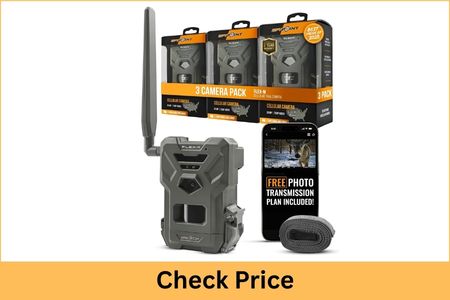
I got the three-camera package on schedule in a compact retail box. The cameras and mounting straps were securely packed, and the olive-green camouflage finish looked sturdy and suited to outdoor use.
Camera & Image Quality: I found the 28MP photos capable of capturing useful wildlife detail, while 720p video at 30fps included sound for added context. Daytime images were generally clear, although customer feedback reports some blurry captures. The 90° detection view gives useful coverage, and Constant Capture technology lets the camera record while transmitting images.
Night Vision & Motion Detection: The 850nm low-glow infrared system provides up to 90 feet of nighttime coverage. Its 0.4-second trigger responds quickly to moving wildlife, while adjustable sensitivity helps control unnecessary activations. I could configure one to three shots per trigger. The faint infrared glow is less noticeable than a standard flash but is not completely invisible.
Connectivity, App & Remote Monitoring: Dual pre-activated SIMs provide 4G LTE connectivity with automatic carrier selection. The SPYPOINT app lets me receive photos, change settings, update firmware, view GPS maps, check weather, monitor battery and signal strength, and use BUCK TRACKER AI. Wi-Fi is not required after activation.
Battery, Solar Power & Storage: Each camera uses eight AA batteries or the optional LIT-22 rechargeable pack. Solar panels are supported for longer deployments. A microSD card is required for local storage and supports up to 512GB. Neither batteries nor the SD card are included.
Build Quality & Outdoor Performance: The IP65 housing protects against dust and water jets, while the rugged case and olive camouflage suit outdoor placement. The external antenna helps with cellular reception, and the included mounting straps simplify installation. The IP65 rating does not cover submersion or prolonged moisture exposure, so placement still matters.
Features, Ease of Use & Overall Value: I found activation and basic operation straightforward through the SPYPOINT app and on-camera controls. Photo, video, Time-Lapse, and Time-Lapse+ modes give me several monitoring options, while Constant Capture keeps recording during transmission. BUCK TRACKER AI helps filter wildlife activity, and GPS maps simplify property scouting. The free 100-photo monthly plan is a strong advantage, while paid options start at $5 per month per camera and unlimited service costs $15 per camera monthly. For a three-camera setup, the combination of cross-carrier LTE, local recording, AI filtering, and remote management gives hunters broad property coverage without requiring Wi-Fi.
Best For: I would choose this three-camera setup for hunters, farmers, wildlife watchers, and property owners who need coverage across multiple locations. The wildlife camera for backyard use also suits anyone wanting cellular alerts, GPS mapping, local storage, and flexible monitoring without Wi-Fi.
Pros
- 28MP wildlife photo resolution
- Dual-SIM cellular connectivity
- Automatic carrier switching
- Free 100-photo monthly plan
- BUCK TRACKER AI filtering
- Supports 512GB microSD cards
- IP65 outdoor protection
- Two-year manufacturer warranty
Cons
- 720p video resolution
- Batteries sold separately
- Paid plans billed per camera
8. GARDEPRO E5S 2-Pack 64MP 1296p No-Glow 0.1s Trigger Motion Wildlife Camera for Backyard

I got the two-camera package on schedule in a compact box. Both cameras, mounting accessories, and included components were securely packed. The camouflage finish looked sturdy and ready for outdoor placement.
Camera & Image Quality: I found the 64MP photos sharp and detailed, while 1296p HD video at 30fps captured moving wildlife smoothly with recorded sound. The 120° field of view gave me broad coverage, and the optical lens helped preserve useful detail. The 2.0-inch LCD also made on-camera playback convenient. For a wildlife camera for backyard monitoring, this combination provides detailed images without requiring cellular service.
Night Vision & Motion Detection: The 940nm no-glow infrared system provides nighttime coverage up to 100 feet without visible illumination. I found the 0.1-second trigger especially useful for fast-moving animals. Three PIR sensors provide 120° detection coverage and help capture subjects approaching from different directions. The motion detection, time-lapse, and hybrid modes also give me flexibility for different monitoring situations.
Connectivity, App & Remote Monitoring: The E5S does not use Wi-Fi, Bluetooth, or cellular connectivity, so there is no app or remote monitoring. I review footage through the built-in LCD or remove the SD card for transfer. This standalone design also avoids cellular subscriptions and keeps operation simple.
Battery, Solar Power & Storage: Each camera uses eight AA batteries, which are not included. The E5S supports the optional GardePro SP350 solar panel for extended outdoor operation. Standard SD cards up to 512GB are supported, but the card must be purchased separately. Loop recording helps manage storage automatically.
Build Quality & Outdoor Performance: The IP66 housing is designed for demanding outdoor conditions, with protection against dust and water exposure. The 1/4″-20 mounting thread gives me flexible placement on trees, posts, or fences. Its camouflage finish helps it blend into natural surroundings, while the stated operating range of -4°F to 140°F supports year-round outdoor monitoring.
Features, Ease of Use & Overall Value: I found the controls straightforward, and the built-in LCD made setup and playback convenient in the field. Motion Detection, Time-Lapse, and Hybrid Mode cover different monitoring needs, while loop recording reduces manual storage management. The 512GB SD support and optional solar panel add flexibility. With no cellular subscription, the two-camera package is a practical choice for hunters, wildlife watchers, and property owners who prefer local recording.
Best For: I would choose this two-camera setup for hunters, wildlife enthusiasts, farmers, and property owners who need broad coverage, fast motion capture, and detailed local recordings without Wi-Fi, cellular service, or monthly fees.
Pros
- Sharp 64MP photo resolution
- Detailed 1296p HD video
- Fast 0.1-second trigger
- 100-foot no-glow night vision
- Three PIR motion sensors
- Supports 512GB SD cards
- IP66 outdoor protection
- Two-year manufacturer warranty
Cons
- Batteries sold separately
- SD cards sold separately
- No remote monitoring
9. KJK 36MP 2.7K Mini 0.1s Trigger 130° Wide-Angle Waterproof Wildlife Camera for Backyard
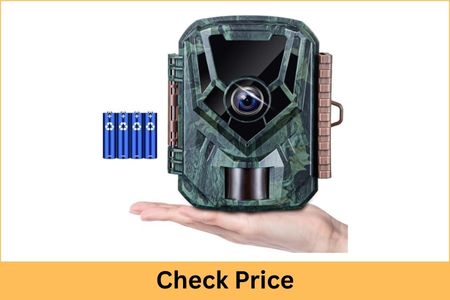
I received the camera on schedule in a compact package. Inside were the camera, mounting strap, stand, user guide, and accessories. The small camouflage body looked sturdy, lightweight, and ready for outdoor use.
Camera & Image Quality: I found the 36MP photos detailed enough for identifying wildlife, while 2.7K video at 30fps delivered clear footage with sound. Daytime images showed good color and useful detail, and the built-in noise reduction helped improve audio quality. The 2.0-inch HD TFT screen made it easy to review recordings directly in the field.
Night Vision & Motion Detection: For a wildlife camera for backyard monitoring setup, I found the upgraded 850nm low-glow infrared system effective at capturing nighttime activity without creating a bright visible flash. The 22 infrared LEDs provide coverage up to 75 feet, while adaptive illumination helps avoid overly bright or dark recordings. Its trigger speed of less than 0.1 seconds reacts quickly to movement, and the 130° detection angle covers a wide area. Adjustable PIR sensitivity and the efficient sensor design help reduce false triggers while still capturing fast-moving animals.
Connectivity, App & Remote Monitoring: This is a fully standalone camera with no Wi-Fi, Bluetooth, cellular service, or smartphone app. I reviewed footage directly on the built-in screen or transferred files through the memory card. There are no subscriptions, activation fees, or recurring costs.
Battery, Solar Power & Storage: The camera operates on four AA batteries and is rated for up to 17,000 images under suitable conditions. Battery life depends on activity levels, recording settings, and nighttime usage. It supports SD cards up to 512GB, although a memory card is not included.
Build Quality & Outdoor Performance: The IP66-rated housing is designed for demanding outdoor conditions and operates from -22°F to 158°F. I liked the compact size because it is easier to conceal and transport. The sealed body and rubber gasket help protect internal components from rain, dust, and outdoor exposure.
Features, Ease of Use & Overall Value: I found setup simple thanks to the 2.0-inch screen and TV remote-style buttons. Photo, video, and burst capture options provide flexibility, while the included strap and stand help with installation. At its price point, the combination of 36MP photos, 2.7K video, fast triggering, and IP66 protection makes it a strong value for wildlife observation and property monitoring.
Best For: I would choose it for hunters, wildlife watchers, gardeners, farmers, and property owners who want an affordable standalone trail camera with fast motion detection, wide coverage, and no subscription costs.
Pros
- Sharp 36MP photo quality
- Clear 2.7K video recording
- Fast 0.1-second trigger speed
- Wide 130° detection angle
- 75-foot night vision range
- Compact and easy concealment
- IP66 weather-resistant housing
- Two-year manufacturer warranty
Cons
- No Wi-Fi connectivity
- SD card not included
- No remote monitoring
FAQs About the Best Wildlife Camera for Backyard
Question: Can a wildlife camera for backyard record animals at night?
Answer: Yes, many models use infrared night vision to capture clear nighttime photos and videos without disturbing wildlife with visible flashes.
Question: How far can a backyard wildlife camera detect movement?
Answer: Detection distance varies by model, but many cameras detect movement from 75 to 100 feet, depending on sensor sensitivity and environmental conditions.
Question: Does a backyard wildlife camera need Wi-Fi?
Answer: No, standalone models can store recordings on an SD card. Cellular models use mobile networks, while some cameras also offer Wi-Fi for local access.
Question: How long do batteries last in backyard wildlife cameras?
Answer: Battery life depends on recording frequency, infrared use, weather, and battery type. Lower activity and photo-only settings generally provide longer operating time.
Question: Can these cameras record videos with sound?
Answer: Yes, many wildlife cameras record video with audio, allowing you to hear animal activity and surrounding sounds when reviewing captured footage.
Question: Are backyard wildlife cameras waterproof?
Answer: Most outdoor models have weather-resistant housings designed for rain and dust. Check the camera’s IP rating before leaving it exposed to harsh conditions.
Question: Can I monitor wildlife remotely from my phone?
Answer: Cellular wildlife cameras can send photos and alerts remotely through an app. Non-cellular models require physical access to view recordings stored locally.
Question: What SD card size should I use?
Answer: Choose an SD card supported by your camera. Many models accept capacities from 32GB to 512GB, depending on their storage specifications.
Question: Are backyard wildlife cameras good for property security?
Answer: Yes, motion detection and nighttime recording can help monitor driveways, gardens, entrances, and other outdoor areas while documenting unexpected activity.
Question: What is the best placement for a backyard wildlife camera?
Answer: Position the camera near animal paths, feeders, water sources, or areas with visible activity. Mount it securely and aim slightly downward for better coverage.